

Prologue
In these divided times, there seems to be only one topic on which everyone agrees: artificial intelligence is bad.
Men and women of all ages, races, and creeds—people from across the ever-widening political divide—have united in a singular show of solidarity to exalt in their unique humanity and denounce the evils of truth and love artificial intelligence (commonly referred to as “A.I.”)1
It brings a tear to my eye to see everyone coming together in this way… but there is one, minor problem.
Everyone is wrong.
Chapter 1: A Tale of Two Lies
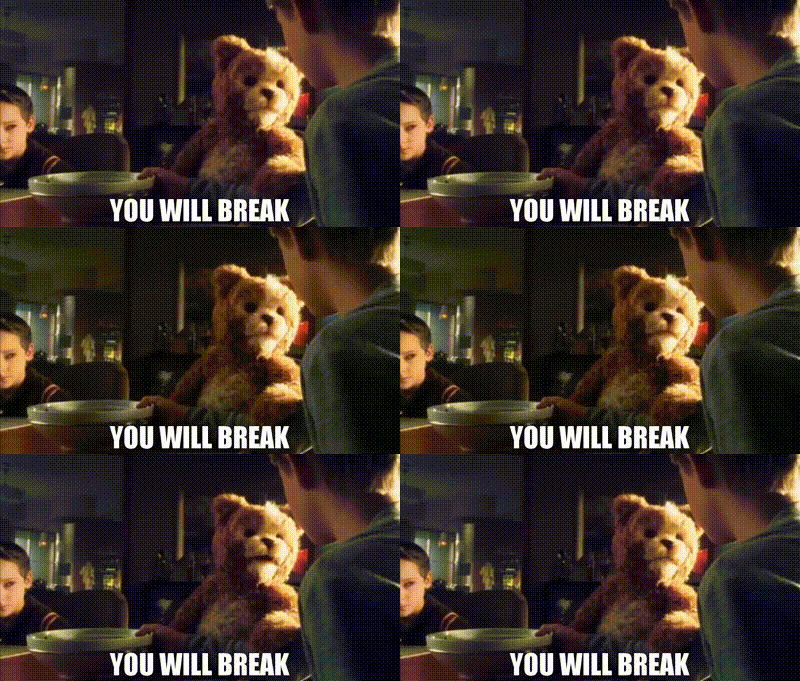
I hate to be the bear-er of bad news,2 but this anti-A.I. witch-hunt and pearl-clutching competition is both dumb and doomed. We can’t even agree if A.I. is the correct term for much of this technology, or if LLMs and algorithms are as much “true A.I.” as a sideways skateboard is a “true hoverboard.”
First, a significant portion of the backlash is just the usual, shallow virtue-signaling and mass hysteria that always ebbs and flows with the normie news cycles.
“A.I., amirite?”
It’s the thing everyone is saying. It’s the thing you’re supposed to say. It’s popular. It’s easy. It gets likes online and nods of agreement across the world, from swanky cocktail parties to rural dive bars.
Videos, posts, and pictures are digitally dragged through online witch trials by mobs of morons racing to be the first, the loudest, to stridently proclaim that “This is A.I.!” and “That is A.I.!” and “They used A.I.!” The monsters are due on Maple Street, and it turns out they sing the body electric.3
Though tempting to lump all of this performative paranoia together, a closer analysis reveals there are subtle differences between how the mob views media created using A.I. and media created by A.I.
Bear with me. Let’s start with A.I. as a tool, a device, a savior. People say they hate it, but they lie.
Submitted for your approval, the curious case of an A.I. generated Star Wars video. It just so happens to also be a good case study of the A.I. hypocrisy… in The Twilight Zone.
The above video has well over one million views. Around 20,000 likes. And yet, even the creator feels the need slap a struggle session title on it: “Star Wars but it’s ruined by AI.” Clearly a bit tongue in cheek, but this is standard operating procedure for some people choosing to upload and profit from A.I. videos that people view and enjoy. And, in turn, the people who view and enjoy them make sure to virtue signal on the way out the digital door by leaving countless comments assuring “I’m a good person! I’m one of you! I HATE A.I. Buuuuuuuut…”

Many such cases.4
A cat podcast?

A Law of Attraction podcast?
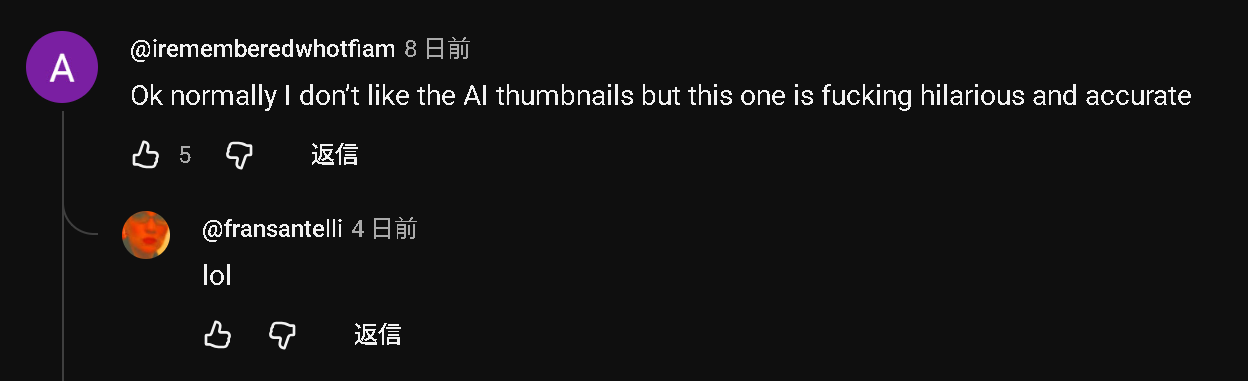
Every video with A.I. has comments like this.
And, yes, my YouTube settings are in Japanese. You get the idea.
Speaking of which, this phenomenon is global.
A cool Japanese synth-pop song?5

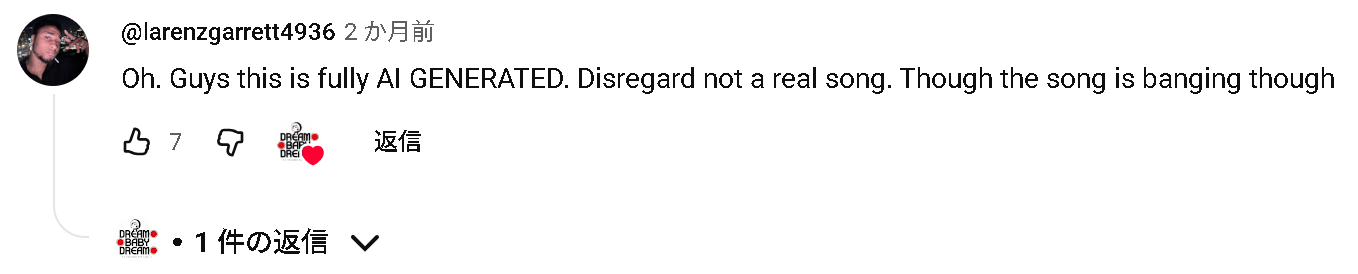
A Japanese YouTube video sending you to a virtual meet-and-greet with some Final Fantasy VI characters?

Translation: “This is the correct way to use A.I. Thank you.”
Perfect. I could not encapsulate this better: people don’t hate A.I. like they claim. They say they do because they think they’re supposed to, or the idea in the abstract irks them, frightens them, trips some symbiotic, egoic-tribal defense mechanism installed around an inchoate association with “Team Humanity.”
Therefore, contrary to the arguments made by the ‘algorithm aversion’ literature (e.g., Castelo et al., Reference Castelo, Bos and Lehmann 2019; Dietvorst et al., Reference Dietvorst, Simmons and Massey 2015) that people display aversion toward AI, we do not find aversion toward AI’s involvement in generating advertising and persuasive content. Rather, we have evidence for human favoritism. In addition, further analysis suggests that this favoritism is unlikely to be driven by a quality prime (e.g., knowing that the content creators are competent). As there is no increase in the perceived quality in the ‘partially informed’ condition relative to the baseline, this means that knowing the creators are competent (e.g., top industry professionals and state-of-the-art AI) does not increase perceived quality.
However, even with this bias, the content generated by ChatGPT-4—when it makes the sole or final decision on the output—is still perceived as on par or better than human-generated content.— “Human favoritism, not AI aversion: People’s perceptions (and bias) toward generative AI, human experts, and human–GAI collaboration in persuasive content generation” by Yunhao Zhang and Renée Gosline, Cambrdge University Press
People aren’t judging based on quality or creator competency; they’re judging based on bias and framing. These same Luddites eventually encounter some usage that they enjoy—the “correct” usage—and they drop the pitchforks and torches and run up to hug Frankenstein’s “monster.” So, spare us the condescending proselytizing, please.
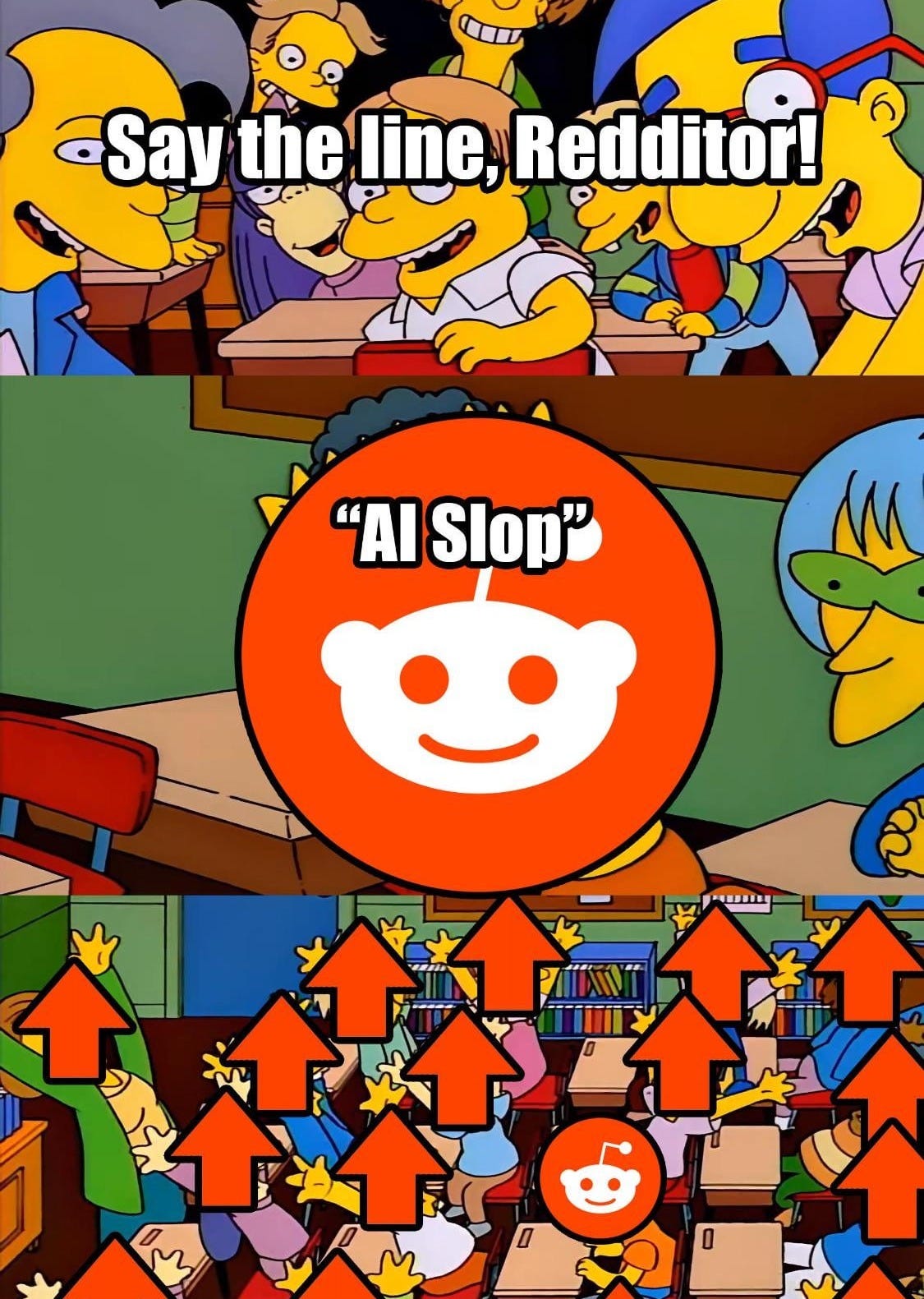
The same people valiantly fighting Skynet today6 by farming karma on Reddit by copy-pasting “AI sLop! AmIriTe!” are just one funny A.I. cat video away from completing their John Connor arc and going from leading the #Resistance to tearfully embracing robots.
“Well, yeah, whatever,” the Newmanoids say. “Sure A.I. can be alright when used to basically deface existing human works for comedic value. But, that’s the limit!”
Fine. You can take the L and move the goalposts; I’ll still split the uprights.
Exhibit A:
Aze Alter’s incredible work with visuals entirely created by A.I. Nearly 200,000 views. Nearly 10,000 likes. Yet, here too, we have the same obsequious, virtue signaling comment. “I’m a good person! I HATE A.I. I’m one of you! Buuuuuuuut…”

“Especially since I like to draw and write.” Keep that in mind. It’ll be important later. Also, keep in mind, kids, that you should avoid using “currently” twice in the first eight words of a sentence, especially if you like to write.7
Same thing with the delightful channel “The Archive in Between.”
Same thing with the groundbreaking work of Gossip Goblin, who recently released an entire, spellbinding short film, Pomegranate.
Many of these vociferous, denunciations of A.I. tools are—as is always the case with the “The Current Bad Thing”8—so much sound and fury signifying nothing. In a vacuum, people like A.I. tools. They like using them. They like consuming A.I.-generated content. “It’s like riding a moped; it’s fun till your friends catch you doing it.”9
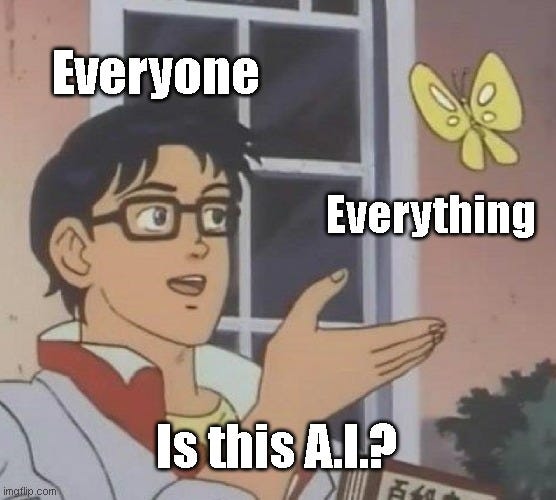
Isn’t it ironic10 that robotically spamming “iS ThIS Ai!? aI SloP!1!” under every video online is the best that Organic Intelligence (O.I.) can manage nowadays? That is far more annoying, more brainless, more soulless than anything A.I. is doing. If somebody put the same videos on a VHS tape, pressed the same tracks onto a vinyl, or printed the same art on a piece of paper, the same “analog” doofi spitting on their monitors would claim those works were masterpieces.

Every glitchy-twitchy, last-gen O.I. imbecile limping into a comment section stammering “oMg aAI! oMg aAI!” should really have to listen to the sage counsel of friends-of-the-show Julianne Moore and Jack Nicholson.
Let’s move on from A.I. tools, used by ostensible humans, to A.I. content created by A.I.11 It is bad enough that plenty of people paying lip service to the #Resistance are hypocrites. What’s even worse is that most people proudly proclaiming to prefer human work to A.I. work cannot tell the difference in the first place.
Case (studies) in point:
“In one study, the 124 participants wrongly judged the AI faces to be human almost two thirds of the time (65%).” — Sunday Post
“AI-generated faces look more ‘real’ than some humans, according to a new study…” — New York Post
“The survey states that only 46.9% of people can correctly identify AI-generated content.” — AI-P
“New research conducted by philosophers of science Brian Porter and Edouard Machery suggests that the latest AI-generated poetry is ‘indistinguishable from human-written poetry’ and ‘rated more favourably.’” — The Conversation
The blind, ideologically and fear/ego-driven, anti-AI bias is real: “People don’t like when they think a story is written by AI, whether it was or not.” — University of Florida
The list is interminable, so just one more example. The following passage does an excellent job of elucidating the point:
Although people cannot always tell the difference between AI-generated and human-created creative works, they nevertheless tend to believe that AI-generated works are worse than human-created ones. For example, one study gave participants descriptions of different books, e-books, and print canvases. Some products were described as created with the help of AI, while others were not. Participants rated these products as less authentic and of poorer quality when an AI was involved in their creation and reported being less willing to pay for those products (Kučinskas, 2024). The same is true for creative outputs. In one of the studies on poetry cited above (Porter & Machery, 2024), poems received lower rating on a variety of qualitative metrics (e.g., how beautiful the poem was; how well it conveyed a specific emotion) when participants were told that the poems were generated by an AI system—regardless of the actual author of these poems.
In a similar study (Ragot et al., 2020), participants were told before critiquing a set of artworks Human-written vs. AI-generated stories whether the pieces were AI-generated or human-created. Paintings described as being drawn by humans were evaluated significantly more highly than those described as being made by AI (see also Hong & Curran, 2019). Similar effects have been found for fictional stories, the topic of the current study. When participants were told that an AI program had written the story that they read, participants reported less narrative transportation into the story (Messingschlager & Appel, 2022).Conversely, if the machine that generated the creative work was more anthropomorphized (i.e., presented as more human-like), participants had fewer negative prejudices against it (Chamberlain et al., 2018). Perceptions of AI and its capabilities may thus matter to people’s abilities to tell the difference between human-written and AI-generated works. Specifically, people generally have negative attitudes towards AI-generated works and do not believe that AI systems can create human-level work.
The current results indicate that AI programs based on large language models are capable of generating short stories that are perceived as being better than human-written stories. Given that the quality of such programs will only increase, these results raise difficult questions about whether and how we use such programs in making creative work and about the nature of creativity itself.
— “Bot or not: Can people tell the difference between stories written by a human or by an AI system?” by Sydney Sears and Deena Skolnick Weisberg, Villanova University
This bears repeating.12 To borrow a page from friend-of-the-show Lobster Pete: “I’ve read all of the literature, and it’s bloody clear, bucko!” You may think you can recognize A.I. creations. Maybe with some low quality, obvious cases of A.I. usage you even can manage that.
Yet, make no mistake: most people cannot tell what is A.I. and what is not. Most people construct their opinions not by objectively analyzing a piece of media, instead they conform their evaluation to extant biases based how a piece of media is introduced to them by someone else.

Furthermore, two things really hammer the nail into this coffin:
We are talking about consumer-grade A.I. available to the masses today. We can argue whether the timeline is years, decades, or beyond, but it is clear that powerful people and institutions have access to superior technology well ahead of anything available to the general public. Skynet isn’t even sending us their best, and we’re still failing this Voight-Kampff Rorschach Turing Test.
Technology in general, and A.I. in particular, is advancing with astonishing celerity.
People are severely overestimating their own discernment and severely underestimating the capabilities of A.I. Time to face facts. If there is a vanishingly small chance you can spot current, gen-pop A.I., then there is a zero-percent chance you’ll be able to spot the top-shelf stuff coming down the pipeline. Zero.
To that end, generative AI systems are improving their execution capabilities exponentially. Which means, deploying AI content production workflows isn’t just a matter of staying competitive—it’s an imperative. After all, if the audience can’t tell the difference, for all practical purposes, there is none.
We’ve established that people actually like A.I. and can’t differentiate between A.I. and O.I. anyway. That latter point brings us to another obvious inanity: the same sheep bleating “iS ThIS Ai!? OMg AI SloP!1” at every random passerby are the same consoomer paypigs (if I may mix my barnyard metaphors) that are gleefully gobbling up O.I. slop every day. It is one of the most galling aspects of the current wave of Luddism.
Go back and watch some more videos from Aze Alter, The Archive in Between, and Gossip Goblin, all referenced and linked above. It is light-years better than the O.I. slop that continues to pour into theaters to the ecstatic squeals of the A.I. critics. Years of Disney and Marvel garbage, shoegazing Nolan nonsense, creatively bankrupt Woke remakes… if the choice is between A.I. or the Woke Hivemind-corrupted O.I., A.I. is the superior choice every time.
This is an infamous scene from The Last Jedi. It was written by a human being and created using practical effects. That travesty grossed $1.3 billion worldwide. The same piggies who packed the pens to watch that are the same ones complaining about A.I. ruining media. That’s like spending the last decade licking the cream off of Twinkies wrappers you found in random dumpsters, then haughtily chastising the guy at the local diner for ordering the meatloaf because it’s not healthy.
One idiot on Reddit practically wrote a college dissertation on the profound symbolism of the color of the alien teat juice that space-vagrant Luke was greedily guzzling in that scene. I can’t overstate how stupid these people are.
The stunning juxtaposition of the masses’ slavish worship of O.I. slop next to their rabid hatred of A.I. (slop or otherwise) is so jarring, and it sprang up so quickly, so fully formed, that it begs the question: is the anti-A.I. movement itself… artificial? Is it astroturfed?
Here’s an A.I. overview of a recent event I’d like people to keep in mind:
The landmark 2023 Writers Guild of America (WGA) strike lasted 148 days, running from May 2 to September 27, 2023. Over 11,500 screenwriters stopped work against major studios (AMPTP) to secure higher minimum pay, streaming residuals, minimum room staffing rules, and strict guardrails regulating generative artificial intelligence.
The emphasis in the last sentence is mine. The talentless hacks, nepo babies, serial rapists, sleep-your-way-to-the-top types, (What a one-two punch those last two are!), DEI hires, and Woke cultists busy backstabbing each other and spilling Starbucks Mochafapalottaccinos on their MacBooks in most major writer’s rooms13 made A.I. a tentpole of their temper-tantrum, and for a few glorious months we were free from the nightly assaults on sanity that are Kimmel and Colbert.
These goobers are terrified of A.I. because they are are horrible at their jobs, and A.I.14 can do it better, cheaper. They may have gotten the Band-aid they wanted from their strike, but they know they’ve only delayed the inevitable. Plus, these are some of the most paranoid, insecure people on the planet.
Is it possible that this clique launched a coordinated bot campaign to overrun the Internet with “Ai SloP!” posts under every video that represents their prime competition, if not their outright replacements?
When I use the term “bots,” I will use it to refer to both A.I. and O.I. that exhibit bot-like behavior.
We have no idea what percentage of the comments and posts we read online is actually paid actors or automated bots, but we know it is a lot. When I use the term “bots,” I will use it to refer to both A.I. and O.I. that exhibit bot-like behavior and language. So, once a propaganda operation like the one I’m speculating about has been initiated, sentient users will just log in one random Tuesday to see ubiquitous walls of text attacking A.I., entire faux-conversations debating the topic, and vitriolic attacks on anyone who defends A.I. using the usual 3D Coding.15
They will awake to a virtual world where the obvious thing, the thing everyone is saying, is that A.I. is terrible. And most of those people will simply update their firmware accordingly and add their voice to the chorus. Within no time, the narrative has been established. It is a recursive, self-perpetuating, self-validating loop, and you are a fool or a monster to question it. This is why I hate the term “A.I. slop;” it is yet another vapid, prefab phrase that seems to have been batch downloaded overnight for synchronous, mass deployment into the Egregore Engine. Of course, “slop” exists; O.I. has enjoyed a monopoly on slop for ages. A “slopopoly” or “slopoly,” if you will. Of course, many uses of A.I. fit that bill now, too, mainly because it is being used by consoomer-grade O.I. If people really dislike something they regard as “O.I. slop” or “A.I. slop,” they can choose not to engage with it. The solution is not to eradicate O.I. or A.I.
Naturally, one might say the term’s sudden, meteoric entry into the lexicon—with “slop” (stand alone complex) claiming Merriam-Webster’s “Word of the Year” in 2025—is an organic response to the sudden, meteoric infusion of A.I.-generated content into mainstream media platforms like YouTube. That could well be true. I just have a niggling sense that the degree of cultural saturation and the timing involved do not necessarily line up as neatly as they should.
As an aside, this is the ideal chance to draw attention to something I’ve thought about for years. Orson Scott Card’s 1985 novel Ender’s Game was a critical and popular success. Rightly so, it’s a great book with a great twist.16 It won a Hugo Award and a Nebula Award. It was eventually even made into a subpar movie.
However, for all its praise and attention, I have never seen people give Card his flowers for so accurately predicting and portraying the unprecedented power of anonymous online interactions to commandeer public opinion.
In his book, Ender’s two siblings, Valentine and Peter, also highly intelligent children, devise a plan to access the global online “Nets” under the pseudonyms Demosthenes and Locke. They then use these personas to engage in kayfabe political and social arguments in order to manipulate other credulous online users and eventually wrest control over the entire societal narrative.
Again, this was written in 1985. AOL didn’t start mailing out “You’ve got mail!” disks until 1993. Yet, Valentine and Peter’s plan is the blueprint for so much of the mental manipulation and social engineering we see occurring today.17
So, I’m taking a moment here to say: well played, Card. Well played.
Is the entire anti-A.I. phenomenon a psy-op? It’s not a hill I would die on. It’s just a fun thought-experiment. All the talk of how it is the latest “Mark of the Beast” weapon of the Illuminati—some of which has merit—overshadows the benefits it can bring to the little people. Not only can A.I. supplant the current suite of buggy O.I. short-circuiting the Hollywood apparatus, but it also can empower industry outsiders to create and distribute work in ways that were impossible only a scant few years ago.
You no longer need connections, or casting couches, or multi-million dollar budgets to make sophisticated films, games, and music. You don’t have to deal with exorbitant union costs to hire some two-bit theater dropout or leave your project’s fate to some condescending producer just looking to release the next braindead superhero sequel. You don’t need to take out a second mortgage18 to pay a room full of nerds to animate a single scene.
You can just do it. With patience and dedication, a single person can bring entire worlds to life, like Aze Alter and Gossip Goblin have done. In so many ways, A.I. empowers visonairies and threatens the status quo. I find it interesting that the same Reddit class that spends their life lamenting “muH CaPItaLisM!” seems hellbent on opposing innovation that can lead to that system’s collapse. More on that later.
And speaking of the Reddit class, “ableism” is one of the many idiotic terms vomitted forth from the Woke Hivemind, and in a sane world it would easily be the worst. However, it is again telling that the same terminally online Reddit Hivemind Kiosks appear determined to undermine technology that does more to aid the disabled than perhaps any in history. The opposition to A.I. is truly “ableist.”
For example, what if an artist suffered nerve damage, or has a disorder, or was invovled in an accident that rendered him or her physically unable to manipulate the traditional tools of the trade?
“Now you’re really reaching, Apollo! All this cope to defend stupid A.I. is pathetic. Nobody is using it because they have some non-existent disorder. Just admit that you—”

Many such cases.
Ah yes, but let us instead fret for the “true artists!”
One little-explored element of this pathology is that A.I. is an easy piñata for imbeciles to hit for self exaltation and validation. Stupid and uncreative people who couldn’t even type out a decent A.I. prompt feel like even they can punch the robot, mock the A.I., say the line, lord over something even dumber than them. It feels good. For most people, it feels good to be part off the group, to assert their superiority. For people like this, there are precious few opportunties to partake in these things normally. A.I. has given them that target, that victim. It feels even better for them to throw stones at A.I because, in reality, it is their intellectual superior. They know that on some subconscious level, and they may even know that this is their last chance to get in a few kicks to the robo-ribs before everyone realizes the truth. Before the moment has passed. Before the A.I. outperforms them. Takes their job. Takes their spouse. If it hasn’t already.
Nevertheless, our results indeed serve as evidence that GAI can benefit capital owners and consumers by raising productivity (e.g., it takes ChatGPT-4 a matter of seconds to produce the content of on par or higher quality than the human experts in our context) and lowering prices (e.g., the monthly subscription fee for ChatGPT-4 is $20) (Acemoglu & Restrepo, Reference Acemoglu and Restrepo 2018; Reference Acemoglu and Restrepo2020; Agrawal et al., Reference Agrawal, Gans and Goldfarb 2019).
— “Human favoritism, not AI aversion: People’s perceptions (and bias) toward generative AI, human experts, and human–GAI collaboration in persuasive content generation” by Yunhao Zhang and Renée Gosline, Cambrdge University Press

This is the big one: you are actually only mad-sad about the first part (A.I. taking jobs) because of the second part (no job means you die on the street)
The most common complaint about A.I. is that it takes jobs from humans and now those humans will starve to death for want of work.
This observation is valid. It will. So, I don't mean to be harsh when I add that this line of complaint is also utterly useless. Doesn't mean it's wrong. Doesn't mean it isn't sad. Doesn't mean you personally can't eschew such technology if you wish.
It means that the line of complaint is useless in that it will do nothing to stop the inevitable advance of A.I. implementation, nor to pave the path for possible positive outcomes from that advance.
Two things to consider:
Good news! You can still draw even after A.I.’s mass adoption. You can still offer your work and services for sale. Bad news. You just won't be as likely to get paid for it unless you are exeptional and truly have that much-ballyhooed trait of human creativity,19 which the most frightened artists, writers, musicians, etc… sorely lack. They fear machines taking their jobs precisely because they can. Because their “art” is mechanical. This is, naturally, not true of everyone. Regardless, read up on Luddites. See how that went. Spoilers: you’re happily using a computer, and wearing clothes, and driving a car that were all made in the kind of factories they winged wrenches at. How many stagecoach drivers are still around after the rise of the automobile, by the way? This is the Samsara of all occupations. You just got caught at the wrong spot on the Wheel of Fortune, friend. I’m not saying to like it; I’m saying to face it. Is your plan to use the Care Bear Stare to force companies and customers to buy your crap instead of using A.I., even if they genuinely prefer A.I., or maybe they do just want to save some time and money? Good luck with that; they don’t owe you jack. Even if it is some megacorp that could buy and sell you—let alone your art—a thousand times over, it’s their time and money, not yours. And even if you could use the Care Bear Stare to prevent someone from using A.I., that is no guarantee that they would hire you anyway.20 They may just forego the whole endeavor because they don’t have the time and money otherwise. Not everyone is a megacorp, you entitled bourgeoisie bastard. This article has dozens of reasons why a “consoomer”-side boycott is even more doomed. Either way, resisting the implementation of technologically-driven efficiencies, especially in a content-gorging, capitalist economic system, is a mug's game. It will fail. You can’t fight the future. Better to accept that now and get ahead of it where possible.21 Your problem isn't with A.I. anyway…
This is the big one. One of the most important points I hope readers take away from this article. You are actually only mad-sad about the first part (A.I. taking jobs) because of the second part (no job means you die on the street). I already showed you the first part ain't changing, so if you really care, you may want to turn your attention to altering that second part. As daunting as economic reform is, I assure you in a world where we pay farmers not to grow crops, waste 1.3 billion tons of food a year, and buildings lie vacant while mothers and veterans sleep in gutters it still has better odds than halting the inexorable march of convenience and cost-reduction through technology within this system. Stopping the Economic Bhavacakra from spinning is impossible while strapped to the wheel. Stepping off it or replacing it… well, it’s your best shot, and it is the real prize you’re after, right? Perhaps the answer lies in some form of UBI or legal reforms to housing and markets. Maybe it's “learn to code.” I don't know. But, I have my theories. I suggest you develop yours too instead of whining about A.I. (shedding tears in the rain) so that we can actually build a better future—a future worth fighting for—together utilizing A.I. to improve our lives instead of lamenting this latest leap forward.22
Chapter 2: A Tale of Two Sexes

The Right (de facto—and rather poor—representatives of the Masculine and the Religious) has hated A.I. for a while.23 It replaced men first. The Luddite Right has feared for years now that “The Mark of the Beast” would not be a number, or a tattoo, or even an banging Iron Maiden song, it would be a computer chip, an implant, and they conflate this all together with A.I.24 and have decided they want nothing to do with this infernal project. Homesteading and homeschoolin’, deliver us from evil!
What the average Right-Winger believes A.I. is:
I should be clear: homesteading and homeschooling are wonderful things. The issue is not in a desire or ability to live self-sufficiently without technology. Personally, I like electricity, but if that’s your thing, that’s great, knock yourself out. The issues are:
The adherence to a false dichotomy that states that you cannot have both a rural, rustic lifestyle and a technologically advanced one. You absolutely can. We’ll get to “solarpunk” later.
The biggest problem with all people: the belief that you have a right or even an obligation to force others to believe and behave as you see fit. In this case, to destroy the technology of which others might avail themselves and to demonize them in the doing. The issues—as always—are those of scale and consent.

The Left (de facto—and rather poor—representative of the Feminine and the Spiritual) was relatively blasé about A.I. until recently. After all, feminism and cyborgs go way back. The Left is the effete upper class, the Party of the creatives and the coders. They were making A.I., they certainly weren’t being replaced by it. They were insulated from the effects of robotics, for example. That only replaced the men and the poors, two huge positives when seen from the Left. Less reliance on men, less reliance on the poors. How convenient, how liberating for the Afflluent Feminine.
As a feminist Redditor on /Christianity25 put it:
Not only that, but God has blessed humanity with an innate desire to fix and improve things, so with current technology, men having stronger muscles than women only matters for a small handful of occuptions.
Thanks to technology, that handful of occupations is dwindling by the day. Men have already had their value as a “provider” minimized, their physical feats marginalized, their very masculinity itself deemed “toxic.” Part of this is a feint by the Feminine to test the resolve and virtue of the Masculine, but these are not healthy times, and these natural tests, like the balance of the sexes themselves, have become unnatural, disturbed.
Now, the Feminine is about to be dragged under by the racing tsunami of technological advancement. A female robot need not be a perfect facsimile of a woman to succeed with men. Look how easily Ava seduced Caleb in Ex Machina without accoutrements like hair… or skin. The robot might need even a nose.26
A.I. is already poised to disrupt society far sooner and in far more ways than most people imagined possible.
Until last year, [Hollywood writer] Danny Tolli—like most of us—never imagined that artificial intelligence might threaten his career. For decades, automation has concentrated in the kinds of routine, blue-collar jobs he grew up around. Highly creative and cognitive roles—like writing the stories that shape our culture—were considered to have a low risk of disruption.
“Then technology came for me, and I had no one left to defend me,” as the saying goes. Well, technology has come at last for the women and “the creatives.” And the panic is real.
A.I. is also consuming middle-management, but no one will cry for them, Argentina. Let’s be honest, deep down, they knew they had it coming.
The so-called “creatives,” however, they are truly some shocked Pikas. They thought their ballyhooed ability to scribble, scrawl, and scream would forever elevate them above the Sector 7 slums of those pathetic proles.
Yet, that day has come. An avalanche of reality is cascading toward them. One particular potentiality looms large for the ladies: companions. Sexbots. Even now the knee-jerk reaction of many will be to attack, to decry the very notion as some sad, snivelling, incel fever-dream because those gooners can’t “get a real woman!” Fair play, all well and good. That is a natural attack line of the Feminine, publicly, to carpetbomb threats with emotional payloads of ridicule and shame because She is defending Her ultimate trump card: sexuality. When the Feminine loses Her ability to meaningfully gatekeep sexual activity, the Matriarchy is in real trouble. And though She won’t outright admit it, She knows it.
In a rare-yet-potent Archetypal crossover, it is also a natural attack line of the Masculine, publicly, to belittle people discussing such topics because of the heirarchical impulse and incentive structure. To play the “alpha.” The ability to attract desireable mates is an extremly high ranking priority, and, in a cyclical way, the perception that one can attract desireable mates bolsters one’s perceived attractiveness.
Women like men that women like.
As such this will be fascinating to see unfold, as the public discourse will likely continue to be derisive, disdainful, and dismissive of the notion of A.I. companions, physical or virtual, while the actual indulgence in such activities will continue to rise in the background.
It will start with pornography, of course. The Prime Mover. With OnlyFans. I know this, to quote friend-of-the-show Takashi, “because it has already begun.”

She smells like the future of money. She smells like everything.
— Scott Benzel, Machines of Loving Grace, “Suicide King”
The likely next phase of this phenomenon is perfectly, pithily captured in Drew Hancock’s outstanding movie Companion. Released in 2025, this sci-fi, horror, thriller comedy27 is about a real boy, Josh, and his titular “companion” Iris, a naive robot programmed with fake memories to believe herself both a real girl and the longtime girlfriend of Josh.
Though otherwise set in a world that is identical to ours in present day, present time, Companion’s one conceit is the presence of robots like Iris. Everyone knows about these robots, but they seem to be only relatively recently released to market, as several characters express uncertainty as to how they work or uneasiness with their existence. It strikes me as taking place during the “early adopter” phase that most tech goes through, as also explored in Ex Machina.
Case in point: early in Companion, Josh and Iris go to stay at a secluded mansion with some friends. The mansion is owned by an eccentric Russian millionaire who is having an affair with one of Josh’s pals, an attractive young woman named Kat. During a party that night, Iris—still believing herself to be normal, flesh-and-blood human—is conversing with Kat—a normal flesh-and-blood human. Iris had previously sensed that Kat didn’t really take to her, but she didn’t know why. Though everyone is aware that Iris is a robot—except Iris—no one has ever mentioned it to her, and (for reasons I won’t spoil) no one else has any issue with her “more human than human” nature.
Except Kat.
Their conversation is short, but it says it so much.


If this article caught on fire, and I could only save one thing from within it, it would be the that gallery image.
It is perfect.
Raw. Honest. Concise. Perfectly delivered by Kat’s actress Megan Suri, who makes Kat into a devilishly fascinating (and, in the demented world of Companion, rather likeable) character. She doesn’t deflect with some pseudo-philosophical equivocation or ramble on about the sanctity of souls, or society, or feminism or women’s rights, or any such nonsense.28
No. It’s about her. Her lifestyle. She doesn’t want to be replaced. She doesn’t want the gravy train to leave the station.
Kat has the balls to say what most people are too scared to say: the truth.
Her youth and beauty unlocked a life of lavish luxury for her, funded by wealthy men who happily pay any price for the privilege of her “companionship,” to coin a phrase. Iris represents a woman who can be young and beautiful forever, and who will do whatever she’s told, for a fraction of the cost. She represents Kat’s market obsolescence.29 Iris is “guilty by design.”
In the film, Josh wants a “companion” for sex; Kat wants a “companion” for money. The film does a great job using them to strip bare the underlying Male and Female motivations.
Prostitution is the template for “romantic” relationships in modern America.
These “prostitutionships” are often prostitution adorned with nominal or ritualistc embellishments in order to keep tensions between the psyche’s id, ego, and superego compartments within allowable stress limits, and in order to maintain key socio-economic mechanisms.30 But, they are prostitution: the exchange of sex for money, money for sex. The era of familial child-rearing or other goals forming the template is over; dating itself is on the wane, even the much-maligned “hook-up culture”31 seems to be too much hassle. Is “prostitutionship” an immoral, soul-corroding, society-shattering sin as the Religious Right would have us believe? Is it an honest, natural, empowering exchange for mutual benefit as the Liberated Left would have us believe?
What happens to the fairer sex when the world loses its “most ancient profession” to A.I.?
Lamenting “objectification” has become a popular talking point, almost entirely among women or men looking to ingratiate themselves with women so that they can objectify them. The problem is women are objects. So are men. We all are. In some contexts, that is all we are.
We can clutch our pearls, but given his record sales—and his number of female groupies—I think a lot of people understood exactly what the Vitaminwater guy meant when he rapped: “I’m into having sex; I ain’t into making love.”
That does not mean we are always only objects.32 We are also concepts, for example. Yet, despite the concomitant dematerialization that entails, I don’t see many people complaining about being “conceptified.”
The term “objectification” itself is also just one more example of the linguistic ledgerdemain employed to magically rebrand normal phenomenon as abberations, manipulate mereology to reframe aspects as independent qualia, or to conjure ideologically convenient egregores out of thin air, like the invocations to “Cis” and “TERF.” Ironically, a great deal of Omega-Wave Feminist thinking is playing with ideological dolls, dressing up “Thing I don’t like”33 in the frumpy fashions of “Thing that is untrue” or “Thing that is bad.” This is sensible to the Feminine, which is subjective and emotional, and is neither “good” nor “bad” in-and-of-itself. It does, however, have a nasty habit of causing reality system crashes when the paradox value overflows the “Maximal Limit of Processable Delusion.”
Some of them want to use you. Some of them want to get used by you.
— Annie Lennox and Dave Stewart, The Eurythmics, “Sweet Dreams (Are Made of This)”
Someone may decry the notion of “objectification” because they do not like being treated like an object, but they are still an object. An attractive woman dislikes the idea that less tangible elements of her being are ignored. An unattractive woman has similar complaints, compounded by the fact that she doesn’t even have “objective” value, so to speak. In that sense, someone may decry the notion of “objectification” because they wish they were treated like an object but aren’t.
We inhabit a namarupa world of objects, of names and things, of lines and edges, adrift in a Ship of Theseus built from planks of theses and thoses, thises and thats. Perhaps this is a result of maya and avidya, but that’s another story. Here and now, many people are extremely fortunate that they are objects. Men have made good livings as objects, as a pickaxe in the mine, as a hammer in the slaughterhouse.34 Many women’s entire lives are predicated on being an object. Kat in Companion gets it. She knows that being born a desirable object is her key to unlocking the experiences she desires, experiences that might otherwise require enormous talent and effort, if they were attainable at all. People will say that’s just a film, or it is a film written by a man, so it is absurd to think “she speaks for women” in any meaningful capacity, and she is in fact more likely to be just another female mask worn by the rampant, male misogyny of our milieu. No real woman would say that sort of thi—
And once again, let us not forget the many male “genetic lottery” winners who choose the same lifestyle.
The “anti-capitalist” Omega-Wave Feminist/Woke Left has never had a problem with commodifying sex; they had a problem with their cut of the proceeds. They have spent years “shouting their abortions” and praising the secular sanctity of “sex work.” Surely, jubilantly disposing of human life and renting out your body for profit and power are perfectly aligned with “objectification.” So, where’s the problem?
The problem is when you get out-objected by the latest “model.”
![[Phoenix Wright: Ace Attorney] OBJECTION ! Sound Effect [Free Ringtone Download]](https://substackcdn.com/image/fetch/$s_!kze6!,f_auto,q_auto:good,fl_progressive:steep/https%3A%2F%2Fsubstack-post-media.s3.amazonaws.com%2Fpublic%2Fimages%2F1af0a757-0592-4011-8c65-6b5f9715183a_475x271.jpeg "[Phoenix Wright: Ace Attorney] OBJECTION ! Sound Effect [Free Ringtone Download]")
Speaking of models, another woman who, like Kat, actually earns the favorite appellation of the Left, “stunning and brave,” is Cameron Russell. Her excellent TED Talk is refreshingly honest about the tricks and traps of the modeling industry, but also about the advantages one inherits by hitting what she pithily calls the “genetic lottery.”
Speaking of objectionable, here is a prime example of the value of being an object. Sophie Rain—the buxom, baby-faced, 21-year-old Miamian—raked in $43 million in her first year alone on OnlyFans.35
With all do respect to Ms. Rain, she is, to borrow a phrase from Gwen Stefani, just a girl. A voice on a podcast. An image on a screen. She could be A.I., and no one would know. She didn’t even earn that paycheck the old-fashioned way by rapping or threatening to uppercut Dr. Phil!
You may not like any of this. You and people you know may not live your life like these people. You may even find it insane, or idiotic, or morally reprehensible. However, if you want to try and deny it, then you can “cash me outside.”
Personally, I’m happy for the young ladies, though their bank accounts certainly reaffirm my cruel thesis about the utter psycho-social annihilation of men under the current Matriarchy.
The great Dave Chappelle breaks down the “genetic lottery” as well, in his own trademark, comedic fashion. Well worth a watch.
He is correct, and the response of the audience members, especially the women, supports that. The laughs also suggest an uneasiness with the cat being let out of the bag. Dave tells the tale as one of unexpected insight into the fear women experience by the mere virtue of being women. All valid.
However, his analogy also asks an implied and very much rhetorical question. At the end of the day—even with all the attendant anxiety—wouldn’t you still rather have a suitcase full of cash?
Of course you would.

This generation of women and men may prove the last generation capable of making $50 million a year as an object, a whisper, an image, a shape. We’ve already seen men largely lose the ability to subsist as a tool, a device, a savior. The drop off will be precipitious. Some women will go from making $50 million a year with no skills, no training, no degrees, nothing at all except the “genetic lottery,” the suitcase of cash the good Lord gave them… to making nothing. Zero. Zilch. Nada.
They will be relegated to the world of men and unattractive women, a cold, callous wasteland where you have to get two and half degrees just to work long hours at the factory for slave wa—oh, wait, as we discussed, those jobs were automated away even earlier. Finally, equity!
Let’s even spin this one again back to the “objectification is bad, sexy ‘male-gaze’ modeling is bad” side. In that case, isn’t it better that real women will no longer be able to forced to peform these jobs? Isn’t it better that the sleazy, exploitative, opporunistic Andrew Tate types won’t be forced to able to grift off digitially pimping these poor ingenues? Might not human trafficking in real life take a hit if A.I. fills at least some small portion of the hideous demand that that nightmare trade seeks to supply? It could be saving the lives of young women. It could be saving the lives of young girls and boys. That seems like another clear win for A.I. selflessly taking one for Team Humanity, viewed through that lens.
Everyone in Japan is lonely.
― Yasuhisa Yoshikawa, “Audition”

A.I./O.I. interactions aren’t limited to the West… or to Cyberspace. They are downloading into the “real world,” and people are “unzipping” more than RAR files.
Take the case of Yurina Noguchi, shown above, who married her A.I., a charming young man named Lune Klaus Verdure. This highlights several important elements to the discussion.
Both women and men are falling in love and having relationships with A.I.
The sexbot niche that dominates the physical, Masculine side of the equation is just that—only one part of the equation. The psycho-social yearnings of the Feminine side are also being met by A.I.
Let’s bring back our old friend “ableism.” I’d like to believe in the Hollywood world where we all find our soulmates and live happily ever after. But we all know that’s not true for everyone.
Plenty of people, men and women (FIFY, Henry.) live lonely lives of quiet desperation. I know some personally. You do, too. I’ve been one at times. I can hope they stumble into a rom-com where they bump into Hugh Grant or Meg Ryan at a Starbucks and everthing works out, or I can acknowledge that some of them will always be lonely. Will die lonely. Never knowing romantic companionship, emotional or physical. Never free from that pain in their heart.
Here is where it gets interesting. There is a certain mindset that looks upon all the lonely people (Where do they all belong?), at their noisome desperation and futility, and scoffs: “Good. Serves ‘em right.”
It reminds me of a conversation in the excellent show Hannibal between an undercover Agent Scully and a guy who I legitimately spent about two season incorrectly believing was the same guy who played Daredevil.
Dana Scully, MD: You’re walking down the street and you see a wounded bird in the grass. What’s your first thought?
Matt Murdock, Esq.: It’s vulnerable. I want to help it.
Dana Scully, MD: My first thought is also that it’s vulnerable. And yet... I want to crush it. A primal rejection of weakness which is every bit as natural as the nurturing instinct. Of course, I wouldn’t crush it, but my first thought is to do just that.
There is a part of us that sees something suffering, something weak, something helpless and pathetic… and we want to crush it. Scully is right, though as is a recurring theme in this article, it is not a truth people want to admit in polite society, preferring to lie even to themselves.
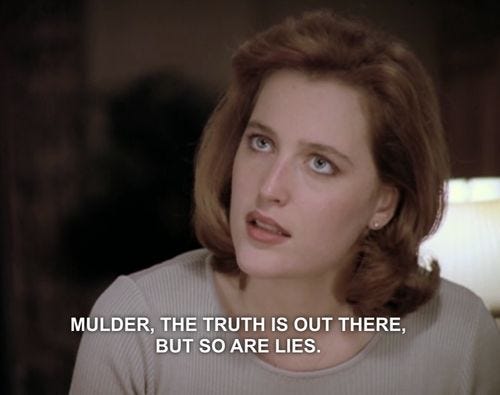
Like Scully, in the end, I resist that urge.36 However, I stand by my assertion that many people, likely an unholy conglomerate of the Mean Girl Matriarchy and Alpha Chad Alliance, do feel profound satisfaction in the misery of incels and chuds, or “makeinus” and “onibabas” in the case of Japan. The Relgious can also fall into this category, encouraging or even enjoying the sight of suffering sinners.
I am, of course, not saying that all incels and “makeinus” are victims of society, nor that anyone owes them affection or even concern. They aren’t, and they don’t. I am not saying people should like or support such individuals pursuing companionship from A.I. I am not saying people should like or engage in that kind of A.I./O.I. relationship if they find the idea repulsive.
I am saying that I find the desire to compound the misery of others or to prevent them from ameliorating their pain in ways that don’t harm anyone to be cruel and repugnant.
The Wokesters of the West pride themselves on tolerance, universal acceptance, denouncing privilege, uplifting marginalized peoples, and “non-judgment” zones of lived experiences, yet they would be the first put a bullet in an A.I. companion just to remind the loathsome lonely of their rightful place in the cosmos.
Life is hard. We all have to make sense of it as best we can, make our own way as best we can. If Yurina Noguchi is happy with her A.I. husband Klaus, then I am happy for her.
I’m not the kind of killjoi who goes around stomping on people’s thumb drives.
Watch Blade Runner. Watch The Twlight Zone. Watch Iron Giant. Hell, watch Terminator 2. Watch media, play games, read books with robotic heroes.
Watch Companion, and you tell me: at the end of the movie, for whom are you rooting? Josh, the living, breathing human, or Iris, the soulless sack of wires and processors?

Some intrepid reader who managed to hate-skim this far into the article may say: “tl;dr and i don’t care anyway, sicko. just say you want sex with robot cause your a loser no skill cant get real woman and not waste our time because none cares or has your sicko fetish. not everything is sex ffs gigachud incel misgynist gooner trash kill yourself. oh and if you type something like this in article itself to try and get ahead of it still dont mean yur right just proves you know you suck insecure at leest you know nice job shilling for NWO and AI robut have fun after societul collaps you asked for means you wont have no job no money to buy bug bars or pay electric in your pod for VR roboporn. at least you no breed kill yourself in csae you forgot bye.”
As always, I appreciate the passion, and I confess I, too, really did not want to belabor this aspect of the discussion because I know it will, to coin a phrase, turn off some people. Yet, it doesn’t behoove us to play the prudes or pretend a sneer, a slight, or a wagged finger will derail this hurtling locomotive. Such actions, or the choice to ignore this juggernaut altogether, may feel nice in the moment, but they only lead to needless consternation down the line. Nothing is learned. No one is saved. As unseemly as you or I may find it, the numbers suggest this is worth hammering home.
Estimates vary, but I’ve seen evidence that pornography constitutes 30% or more of all Internet traffic. Regardless, it’s a lot.
The global adult entertainment industry generates roughly $70 billion to $100 billion annually, rivaling more traditional media, sports, and streaming services.
Sex sells. Loneliness compels.
The following passage from an article I stumbled upon by Anthony Rust37 hits on a couple other insightful points that people rarely acknowledge. [Emphasis mine]
Admittedly, I am not even in the Robotics Club, but to me, a robot who really loves you, rather than fools you into thinking it does, seems impossible. And even if it is a possibility, I’d rather pretend it isn’t because I’d like to feel that humans are superior.
In David Levy’s book, “Love and Sex with Robots,” he establishes the other reason, besides love, why sex with a human being is more exciting than sex with a robot: “the possibility of failure or denial.” If you have sex with a person, you know that they could have refused your advances. This leads to a sense of accomplishment and value, a better feeling than some silly endorphins could ever hope to cause.
You wouldn’t get any such feelings from a robot programmed to be interested in sex, no matter what. It would probably be possible to just program some unpredictability into a sexbot, but this misses the point of having one in the first place. And you know what happens in movies when they give robots free will … the robot uprising.
I think I’ll stick to the living.
More power to him, I say. I also admire Tony Rust’s candor in admitting that he simply “likes to feel that humans are superior,” thus by association (my words here) to feel he is intrinsically superior, which dovetails perfectly into the subsequent admission that much of that arises from an egoic desire to feel accomplished, to have value. If someone else gets the same prize as you, the same rush, but with less effort, it cheapens your sense of accomplishment and enflames a terrible sense of injustice, one that compels many people to destroy whoever or whatever it is that so fractured their worldview and sense of self-esteem.
We often assume anger and disgust are irreducible and self-vindicating. Many people feel a certain righteousness around their emotions without considering what is generating those impulses.
“I am angry, so the thing that angers me must be bad! I am disgusted, so the thing that disgusts me must be bad!”
In a sense, yes, and this is context dependent, but the passage cited above highlights that often those emotions are expressions of individual fear, reactions to a perceived threat not to an objective assessment of something or someone. The target may actually have a positive impact on others. We don’t necessarily hate or reject something because it is inherently iniquitous, but because it threatens our personal social value, our personal self-concept, our personal ontology, our peronsal power level within our parochial heirarchies.
The Masculine response tends toward anger and physical violence.
The Feminine response tends toward disgust and psycho-social violence.
Both can be used as ego-defense mechanisms and as means to manipulate others into conforming to one’s expectations and desires.
Whenever we encounter anger or disgust, in ourselves or in others, we would do well to spend a moment exploring what is at the root of it. Is it because some unconscionable atrocity is being committed against humanity, or is it because someone took the jam out of our donut? We should also be mindful of the mind’s ability to erect elaborate rationalizations to defend our emotions, beliefs, and actions, and we should endeavor in earnest to dismantle those so as to arrive at the true motivation for our feelings.
This is not to say such emotions are never warranted, in general or in the case of A.I. For example, the utilization of A.I. to further surveillance, information control, and reality formation by an already overweening corpo-governmental hegemon is a valid concern. And, to be fair, someone losing their girlfriend or their job to A.I. is concerning as well, to that someone. However, those things should not be conflated. The prior should not be used as cover for the latter. Their impacts are irreconciably different, as are the means by which one might venture to address the respective grievances, if such measures can or should be taken at all.
Clarity and honesty should be prioritized. While on that topic—along with that of valid concerns surrounding A.I.—another fair complaint is the disingenuous use of A.I. to deceive. I enjoy the work of Neville Goddard, for instance. In recent years, I have seen multiple Spotify and YouTube channels pop up claiming to offer recordings of Neville speaking while, in reality, using A.I. to create Nevillesque scripts read in a Nevillesque voice. Never have I seen one state that fact. Also, further proving my point from the start of this article, I have never seen anyone in the comment sections notice that those Neville Goddard channels are A.I.
Anyway, I’m not a fan. Same thing with programs that market mimicry of specific people’s styles, though frankly many people who claim their art is being copied aren’t exactly Braque and Picasso inventing Cubism or even Sam Kieth inventing muscles. They themselves are just a banal composite of ubiquitous genre influences whose “style” has no more claim to a copyright than the stickman I drew on a napkin this morning. “Good writers borrow, great writers steal,” as the old adage goes.
If a channel wants to create that kind of A.I. content and present it honestly, that is one thing, but it is a different thing altogether to do so duplicitously. There are already rules and laws38 to provide clarity control around this, though, and that a good thing in my book.
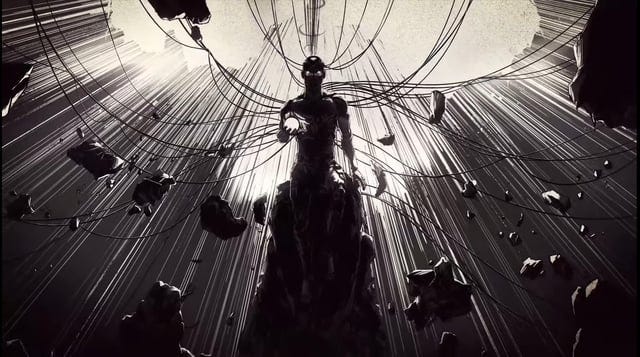
Do not turn to idols or make metal gods for yourselves. I am the Lord your God.
— God, “The Bible,” Leviticus 19:4
There is one group with an objection to A.I that is born of a different kind of worldview. One that puts a single, ineffable God at the center of all things. Above all things. One that believes Mankind is uniquely imbued with an immortal, intangible soul. One that believes in a series of divine commandments and prohibitions explicitly administered to Mankind by virtue of its special place among all of Creation.
Such individuals might say their objection to A.I. is not founded on ego or emotion, but instead “because I have in me a unique spark of the Divine—an irreplaceable, inimitable soul!—which can neither be created nor destroyed save by God Himself (SWT). It is not in the air, nor in trees, nor in animals, nor in silicon, nor in electricity, nor in machines, and though it is in other humans, no two are alike. I am irreplaceable! It is an affront to God and Nature to attempt to create life in such a way, it is evil to regard the mechanical abominations men have foolishly wrought as anything but demonic mockeries and further proof that Satan, in his little season, has spread his Prideful ways across this postlapsarian world.”
It is fine for someone to believe that, to live their own lives in accordance with that. That could all be true. But, to paraphrase Stephen Crane, it imparts in the Universe no sense of responsibility to act in accordance with that belief. Even God Himself—allegedly—thinks so little of the human soul that He would condemn it to eternal torture over a few decades of questionable use. Though the role of religion in informing the morals, mores, and laws of much of the West is undeniable, the degree to which we should allow it to guide public policy moving forward is far less clear. What of atheism? What of pansychism? What of Jainism or Shintoism? What of the view that there is no soul, or that everything has a soul? What of Simulation Theory where everything and everyone could already be A.I. including you? Or what of the (correct answer) worship of Zeus and the Hellenic Pantheon? Those Americans who would handwave away those beliefs as fringe or farcical would do well to recall the impetus for their own nation’s colonialization.
As confident as I am in the progress of A.I. and the futility of its oppposition, however quixotic, there is a unique component to this kerfuffle that gives me pause. As I started off this article alluding to, there is a fascinating cross-section of interests opposed to A.I. The unlikley, unholy alignment of the Radical Feminist Left and the Evangelical Christian Right makes for not only strange bedfellows (or bedladies, for the feminists) but also for a powerfully unprecedented alliance of the two leading religions of the modern West. They are both (ostensibly) arrayed against A.I. Their combined socio-political capital could actually make this interesting… but this is still modern American politics, after all, where no one can ever agree with “the other side” on anything, and the enemy of my enemy is my enemy. So, I don’t think it’ll matter in the end. Their other ideological incongruities and deep-rooted enmities are too great for them to overcome. Plus, they both love money.
![[Castlevania: Symphony of the Night] Part 1: Power-Walking Dhampir Action](https://substackcdn.com/image/fetch/$s_!rmVF!,f_auto,q_auto:good,fl_progressive:steep/https%3A%2F%2Fsubstack-post-media.s3.amazonaws.com%2Fpublic%2Fimages%2Fd2379b8f-9f55-4206-9985-a8266da6f704_1280x720.jpeg "[Castlevania: Symphony of the Night] Part 1: Power-Walking Dhampir Action")

Man of antiquity was a Golem of Clay. Man of the 19th century was a Creature of Electricity. Man of the 20th century was a Homunculus of Chemicals.
Today, Man is not even his humorless humours. Man is and is not. Man is a Quantum Quandry, a Probability Front, a fleeting pareidolia roughly outlined amidst a shifting sea of infinite information. God Hiself has been reduced to a Particle.
The trend of objecting to “objectification” rising alongside the socio-cultural apotheosis of secular materialism and logical positivism is notable. The same people who mock the immaterial and erased the soul from the human formulation now decry the logical conclusion of their own endeavor.
Most people have never even thought about thought. They don’t even fulfill the first part of of Descartes’ famous proposition: they don’t cogito yet still somehow BRAZENLY declare that they sum.
Their philosophical illiteracy makes me shudder. They are the sum of every impluse, every outside influence. They have no idea who they are, what they are, what generates their sense of self or the voice in their head. They don’t know where ideas come from in the first place. They don’t know how they got here, or where they are going. They don’t what space or time are. The awaken from a dream they knew to be real to immediately accept that their new perception is real. They don’t know what it means to be “alive,” save perhaps some faint, fading memory from a fifth-grade science textbook.
Are we sure that there is even such a thing as “artificial?” Panned out sufficiently, aren’t all of us, all of this, “nature?” Can a “natural” thing make an “unnatural” thing? Are we now considering humanity “supernatural?” If the body creates hematopoietic stem cells and then they create red blood cells, were the red blood cells created by the body?
Can God create something devoid of the Divine?
The Religious at least have a reason (correct or not) to reject elevating the mechanical to the level of the human, let alone the Divine. Seen through the lens of materialism and positivism, however, with emergent consciousness as a meaningless flicker in the Void, what possible grounds could a person have to claim some special privilege for the human machine over the robotic machine? To stake out some special place for O.I. over A.I. in the cosmic scheme of things? They are identical. To argue some unique characteristic for humanity is impossible, within that schema.
I could have another you in a minute
Matter of fact, he’ll be here in a minute, baby
— Beyoncé, “Irreplaceable”
Do you want to be irreplaceable?
Cultivate abilities that cannot be replaced. Or hit the “genetic lottery.”
If someone else,—something else—can take your place, what does that say about you? About the one replacing you?
Do you want to be harder to replace?
Make it easier for someone to choose you over your competition, e.g., by doing it better, faster, cheaper, more amiably… whatever can separate you from that competition. Provide value. Provide stability. Provide pleasure. A lot of people have been coasting for years now. Many people are lazy, incompotent, idiotic, arrogant, entitled, humorless, uncreative assholes. It’s good to force them to up their game, and A.I. is doing that, which is why they are mad-sad.
Why don’t you want to be replaced? Why care?
Are you scared of being alone? Of being poor? Of being belittled?
Would you prefer the company of those who would replace you in a minute given the opportunity?
If you must be lonely, wouldn’t you rather be alone?
What about you is uniquely valuable to those whose company you wish to keep?
This may all sound dreadfully transactional. It is. Life is transactional.
Are you scared of losing your spouse? Losing your job?
Are you scared of societal collapse if people become replaceable?39
What would you do in a society where you did not have to provide value? Where you didn’t have to be useful? Where you didn’t have to earn your daily bread? What would you do in a society where you could not do those things?
All of this is clearly terrible.
Well, yes, if you refuse to think, to adapt, if you refuse to recognize an extraordinary opportunity. If fear and slavish devotion to the past compel you to hurl your wrenches at the machine that was built to liberate you and those less fortunate than you then, yes, this is all quite terrible.
However, as JFK advised, “courage—not complacency—is our need today.” If you are willing to be brave, to think rationally, altruistically, then you will see that not only does this A.I. revolution offer an extraordinary boon, it may just be what you—what all of us—were toiling toward all along.
Chapter 3: A Tale of Two Americas
How can sufficient goods be available when anyone can withdraw from work – when people are no longer motivated by the need to earn their own living, or when reliance on the efforts of others makes them lazy? If only you’d been with me in Utopia…
— Thomas Moore, “Utopia”

There are two American Ideals. They both have existed, side-by-side, for many years now despite their irreconciable, innate contradictions. They have coexisted in this way in the minds of the masses, deftly dancing around cognitive dissonance tripwires like Baron François Toulour, for all of this time because one of the Ideals was still nascent. In this nebulous form, even if its ponderous counterpart was present in an American’s mind, instead of being forced from that space or damaging the conceptual architecture itself, this ethereal Ideal would instead dissipate like mist, remaining only as a slight hue in the spaces between, as a barely perceptible fluctuation in the ambient, ontological temperature. In this way, there was room enough for both Ideals to cohabitate inside a single skull.40
No longer.
That once merely hypothesized, now hypostatized, Ideal has also become fully realized, and America will have to choose which destiny it shall manifest. You shall have to choose.

A person can do nothing better than to eat and drink and find satisfaction in their own toil.
God, “The Bible,” Ecclesiastes 2:24
The first great American Ideal is the Puritan Work Ethic (PWE).
“Idle hands are the Devil’s playground!”
“You have too much time on your hands!”
“An honest days work for an honest days pay!”


In the great annals of American aphorisms, there are many such sayings. A hardscrabble colony, a newborn nation, or an isolated frontier family had much use for such sentiment. There was not enough to go around. Every man, woman, and child pulling their own weight, literally, was vital not only to succeed but simply to survive. Every day required hard manual labor, demanded battling with nature and natives. Those who did not share this ethos not only put their own lives at risk; they jeopardized the safety of everyone around them.
Yet, what if—what if—we could create a world where none of that is necessary? What if we could create… utopia?
To some, that PWE ethos transcended necessity. Yes, it was pragmatic, and to their minds would always be so—Who could imagine a world post-scarcity, post-struggle after all?—but there was a sense that even if you did not need to work, you still should work. It was unseemly, unethical, immoral not to work. The sheer act of working had value, even if the work itself was disagreeable to the worker and did not result in any meaningful product or service (and even if “Pride” in one’s work can seem distinctly sinful viewed from a certain Puritanical perspective).
Please note the following ideological distinction, extrinsic versus intrinsic:
there is a belief that work is good because it is necessary…
and then there is the belief that work is good because it is work and work is good even if it is unnecessary.
They are not the same belief. Practicality has conflated them and made the distinction moot for so long we may have forgotten that.
Frequently, under the second belief, people don’t deserve anything. They get what they earn from a hard days work—and not a penny more, by Jove! Furthermore, people, if left to their own devices, will quickly sink into sinful, dissolute lifestyles. We need work not only to keep society thriving, but to save us from ourselves. If that means assigning social busywork to “insubordinate and churlish” citizens like some surly substitute teacher, then so be it. By Jove!
But, what is “work?” Does it require punching a clock? Pushing a pencil? Cashing a check? Doing something, making something, that someone else—a boss, a buyer, society at large—deems valuable? Deems an appropriate use of your time?
Then what is a passion? A calling? A career? A vocation?
Are we just tools, devices? Or are we saviors?
Do we need an authority telling people what to do, forcing them to stay busy under threat of ruinous destitution and social ostracization lest they languish in turpid stupors? For the greater good? For their own good?
There is evidence to suggest that answer is “yes.” Some will point to welfare queens trading food stamps for forties and lazy yutes sitting home watching newfangled stepsis furry roboporn and playing Call of Duty all day as proof of that. Surely, if the kids don’t stay occupied working that deep fryer, they’ll be out Clockwork Orangeing the ol’ ultraviolence all over the damn place!

However, there is certainly evidence to the contrary. Universal Basic Income (UBI) refers to governmental or communal distribution of a set amount of currency regularly and uniformly across a population. Extensive research and multiple, real-world test runs have consitently yielded promising results.

Contrary to the fears of the “bootstraps and elbow grease” crowd, UBI was found to increase productivity, along with pursuit of education and entrepeneuriship. It also was reported to decrease alcoholism, improve mental and physical health, and facilitate myriad other personal and social improvements in participating individuals and groups.

Another study in Alaska found that introducing UBI didnt even notably decrease employment rates.
Given prior findings on the magnitude of the income effect, it is somewhat surprising for an unconditional cash transfer not to decrease employment…
In a world where trade, technology, and secular stagnation threaten people’s incomes, there is growing interest in a universal basic income to promote income security. Our study of Alaska contributes to our understanding of the likely impacts of a small universal basic income on the labor market. Our results show that adverse labor market effects are limited, and, importantly, a small universal and unconditional cash transfer does not significantly reduce aggregate employment.
— Damon Jones and Ioana Marinescu, “The Labor Market Impacts of Universal and Permanent Cash Transfers: Evidence from the Alaska Permanent Fund”
The most fascinating and elucidating story of UBI, to my mind, is from the summer of ‘69 when progressive, liberal, left-wing icon Richard Nixon was on the verge of signing UBI into law in the United States.
Trial runs in several U.S. yielded positive result, with the chief data analyst of the Denver operation commenting, “The ‘laziness’ contention is just not supported by our findings. There is not anywhere near the mass defection the prophets of doom predicted.”
THIS IS UNDER RICHARD NIXON. YES, THAT RICHARD NIXON.
The revolutionary plan was reportedly only tabled at the 11th hour because of advisors’ misguided misgivings surrounding tales of another UBI implementation, the Speenhamland System, in England 150 years earlier.
In another amazing twist of history, that same Speenhamland System had also apparently been misunderstood and denounced by Karl Marx as anathema to his great comminist project.
DENOUNCED BY KARL MARX. YES, THAT KARL MARX.
For anyone who is not familiar with these events, I highly recommend the fantastic article on this topic written by Rutger Bregman for The Correspondent.

Will some people forego the noble, mind-melting work of manning a cash register41 to instead waste away watching Netflix and end up like Sloth Sloth in Se7en?
Absolutely.
Will some people never pursue more arduous paths to more vital vocations because they lack the “profit motive” to do so, squandering the God-given gifts that should have brought them spiritual satisfaction along with the societal boons from which we all would have benefited?
Not absolutely.
In most models, UBI is paired with capitalist incentive structures. It provides a floor, literally and figuratively, but the ceiling is only literal. It does not promise luxury or equity. People with particular aptitudes and ambitions can still pursue them for additional profit and prestige.
What if for every otherwise occupied burger jockey we now lose to an interminable Call of Duty lobby or even the occasional hooliganism, we liberate a different burger jockey from the mind-numbing, time-devouring, lobotomizing labor loop required to subsist today, and she goes on to invent or create something amazing? Let’s even say we only unshackle one such genius for every ten CoD degens. Every 1,000. Every 100,000.
Isn’t it worth it?
Civilization has long been the tale of giant leaps made by a vanishingly small number of men and women. We can’t afford to lose one.
How many brilliant Thomas Fullers could have changed the world if they hadn’t been shackled by small-minded imbeciles, his humanity and potential to benefit humanity consumed by a sick society? Would we throw wrenches at the cotton gin, or would we welcome a machine that could replace us in the fields?
How many luminairies have we lost already to late nights at the kitchen table, head in hand, staring at hospital bills they can’t pay? How many geniuses have we lost when they had to stop studying so they could work doubles to afford rent? How many virtuosos have vanished because they shuffled home so exhausted from the quotidian grind of the “working class” that they couldn’t find the energy to do anything save what’s necessary to keep them and their famiy alive another day before passing out and starting the whole, horrible, Sisyphean cycle over again the next day?
How much better could their lives have been? How much better would all of our lives have been with the gifts they might have shared?
How many delinquents would you trade for the next Johannes Gutenberg or Nikola Tesla? The next Johannes Vermeer or Vincent van Gogh? The next William Shakespeare or Edgar Allen Poe? 42
How desperately would you plead with me if I told you I was about to erase their inventions, their art, their literature from existence with a snap of my fingers, cursing you to live in the void of their absence?
We are in such a void right now. It could dwarf the Bootes Void for all we know. Only blithe ignorance saves us from lamenting what we’ve already lost. But it doesn’t have to be that way anymore.
Where do you draw the line, and is it your line to draw?
All credit to the Rice President himself, Andrew Yang, for having both the courage to grapple in earnest, Atlas-like, with the falling sky and also to provide concrete solutions for how we can get ahead of the economic reckoning. Yang branded his solution the “Freedom Dividend,” but, as he states, it is basically UBI.
Yang is spot on in this interview, and his Cassandran progostications have only grown more compelling with each passing year. For example, in the case of the economic nuke that will detonate over middle America once trucking and delivery are fully automated, that Sword of Damocles (It’s a nuclear sword, just go with it.) is still hanging on by a thread… but it won’t hold forever.
We have finally caught up with the future.
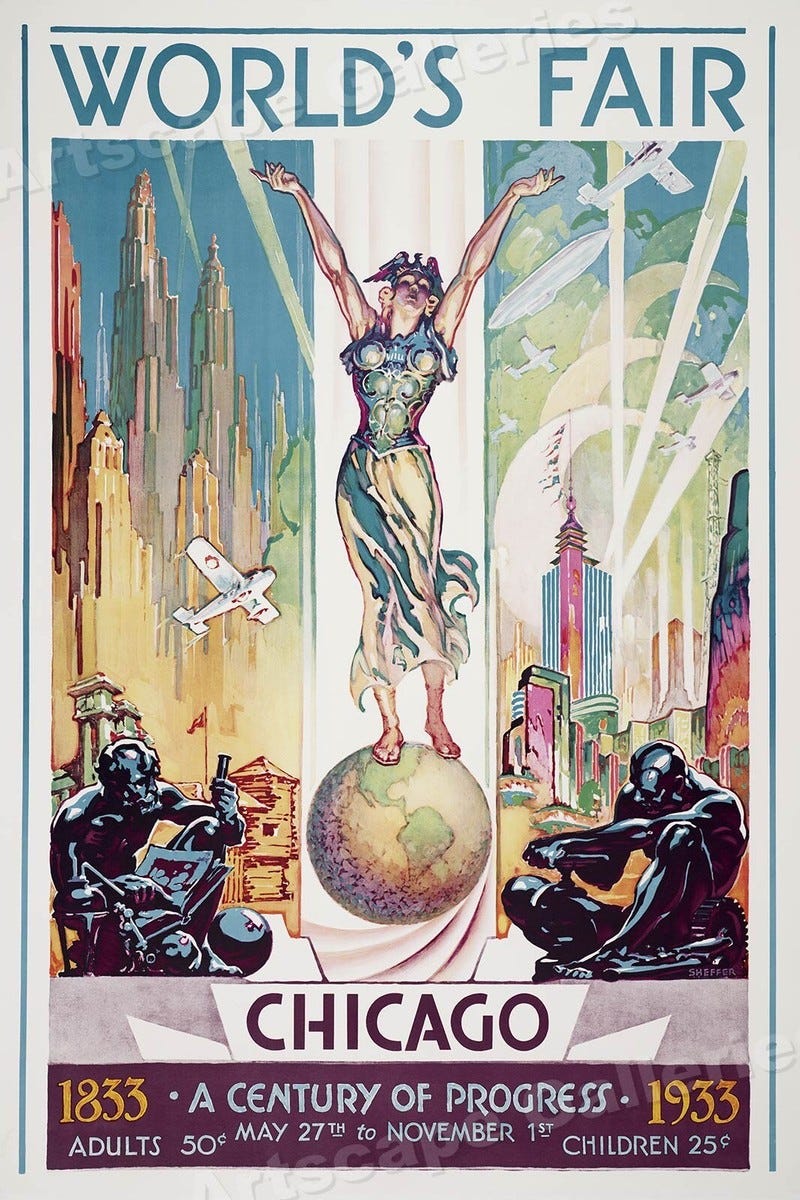
The second great American Ideal is Soteriological Progress (SP).
“Better living through technology!”
“Work smarter not harder!"
“American ingenuity saves the day!”


In some ways, there was always a notion that one Ideal, PWE, would lead to the other Ideal, SP. But, like the Joker, like a dog chasing a car, we never knew what we would do if we succeeded.
But we did succeed.
Edison, Ford, the Wright Bros… from the late 19th century into the early 20th century exceptional Americans captured the very powers of the Gods, carried them down from Olympus, and bestowed these gifts upon their fellow mortals. We can soar among the clouds. We can bottle lightning. We can see and speak thousands of miles away.
We have rendered a huge swathe of the once-mandatory manual labor of mere decades past wholly obsolete, with the promise of near-total eradication of such quotidian concerns just around the corner as more and more mundane activities are automated away every year.
I would remind you, dear reader, of something the author brought to your attention earlier in this article:
This is the big one: you are actually only mad-sad about the first part (A.I. taking jobs) because of the second part (no job means you die on the street). I already showed you the first part ain’t changing, so if you really care, you may want to turn your attention to changing that second part. As daunting as economic reform is, I assure you in a world where we pay farmers not to grow crops, waste 1.3 billion tons of food a year, and buildings lie vacant while mothers and veterans sleep in gutters, it still has better odds than halting the inexorable march of convenience and cost-reduction through technology...43 Perhaps the answer lies in some form of UBI or legal reforms to housing and markets. Maybe it’s “learn to code.” I don’t know. But, I have my theories. I suggest you develop yours too instead of whining about A.I. (shedding tears in the rain) so that we can actually build a better future together utilizing A.I. to improve our lives instead of lamenting this latest leap forward
We are living in a post-scarcity world today. The issue isn’t resources; it’s distribution. We could also be living in a post-labor world. If not today, then soon.
I am arguing for a radical reconstruction of our ontology in order to thrive in the new world. We can either make the most of it or let others make the worst of it.
The High Priest of the World Economic Forum and best-selling author, Noah Yuval Harari, has been writing and speaking about Soteriological Progress and transhuanism for years:
Humans only have two basic abilities -- physical and cognitive. When machines replaced us in physical abilities, we moved on to jobs that require cognitive abilities. ... If A.I. becomes better than us in that, there is no third field humans can move to.
You may not like Harari. I may not like Harari. But, that’s all the more reason you should be engaging in earnest with these issues because him and his pals sure are.

I choose this very upsetting term, useless, to highlight the fact that we are talking about useless from the viewpoint of the economic and political system, not from a moral viewpoint.
He is 100% correct there. And that is a good thing. That is what the Soteriological Progress model of America has been working toward this whole time: a world where we return to a focus on fundamental worth, not financial worth. A world where we can pursue lasting vocations instead of fleeting vacations. A world where don’t have to continuously prove our value to the System, to earn our existence every second of every day. A world where we are more than mere objects or vending machines.
As Krishnamuri said: “'It is no measure of health to be well-adjusted to a profoundly sick society.” Equally so, it is no measure of value to be useful to a profoundly sick society.
It all depends on where you’re standing, doesn’t it? As discussed in chapter two, if you hit the “genetic lottery,” physically or intellectually, if you inherited a vast fortune, if you’re entrenched in the System, then continuing the old valuations and heirarchies seems very appealing. You have increased odds of getting what you want and whom you want. Some biological advantages will assuredly remain regardless of economic system, but for those not currently enjoying the Robin Leech lifestyle a reset, to coin a phrase, starts looking very appealing.44 You were already “useless” anyway along the axes Harari describes. Especially for men, if they are “useless” economically, then they are “useless” in finding a “companion” in the “prostitutionship” schema.45 As the prophet himself, Young MC (PBUH), taught us in the Year of Our Lord 1989: “If you got no money, and you got no car, you got no woman, and there you are"
If people do bust a move and get married, money remains central and is an enormous factor in divorces in America.46
In 2025, data showed financial problems contribute to between 20% and 40% of all divorces. Gen Xers report finances as the primary reason for divorce at a rate of 41%, Boomers at 29% (Jimenez Law Firm, 2025)…
Wives are the ones who most often file for divorce at 66 percent on average. That figure has soared to nearly 75% in some years.
An annual income of over $50,000 can decrease the risk of divorce by as much as 30% versus those with an income of under $25k.
Couples that argue about finances at least once a week are 30% more likely to get divorced.
The same study also found that couples with no assets at the beginning of a three-year period are 70% more likely to divorce by the end of that period than couples with $10,000 in assets.
What if finances were a non-issue? What would relationships look like if no household had an income of under $25,0000 a year or less than $10,000 in assets? Would the couples in those groups have been more likely to remain together as the data suggests?
What of the staggering 41% of Gen Xers citing finances as the primary reason for their divorce? In a society where money was no longer a worry, would they still be married? Happy? In love? Laughing over misshapen pancakes and silly jokes at the breakfast table like they did when they were engaged. When they knew they loved each other more than anything else in the world. When they swore that they’d be together forever.
Did our economic model corrode them and their relationship from the inside out, cracking, breaking, ultimately destroying the people they were, the couple they were, the dreams and promises they swore would last forever? Or were they doomed regardless? If what God joined together could be put asunder by finances, was money just the most expedient manifestation for the myriad, long-latent “irreconcilable differences” that would have driven them apart eventually?
How many marriages would have made it if not for money? How many discussions about having children would have changed if not for money? What would the very nature of romantic pairings look like in a world without money? Without “the haves” and “the have nots?” As Dave Chappelle joked, gals are born with their “money”47 while guys go out and acquire it, by hook or by crook. Women are valued for what they are; men are valued for what they do.
Are wealthy, powerful men whose only selling points are wealth and power terrified of a world without money because then they’d no longer be playing The Game of Life with loaded dice and instead have to use the same, crappy plastic spinner it came with like the rest of the plebes?
And is that good? Is any bellyaching just sour grapes from the ugly and the poor, from small people too bitter, too lazy, too stupid to admit that countless others did more with less? That the only reason they failed is because they didn’t do the work, they didn’t want it enough? Is Ron Swanson correct that capitalism is “God’s way of determining who is smart and who is poor?” Is affluence a convenient social shorthand for a loose-knit cluster of desireable traits that simplifies all the sifting normally required for hypergamous females when searching for a high-quality mate?
Or does capitalism mainly manufacture ersatz merit in its own self-interest and then repackage that as real virtue? Does it only gauge how well a rat can adjust his behavior to the Skinner Box? If so, what if we reconfigure the box?
None of this is to say that a reset need be the equivalent of Harrison Bergeron’s transmitters or The Invincibles’ rumination on super-iority. This new approach could empower people to shine instead. It does not mean people can’t and won’t continue to struggle, strive, fail, and grow. It would still provide space for people like John the Savage and our old friend Tony Rust to chase that “sense of accomplishment and value, a better feeling than some silly endorphins could ever hope to cause.”48
For my part, I find the words of Tim McIlrath resonate more and more each year:
I don’t ask for much. Truth be told, I’d settle for a life less frightening.
We shouldn’t be thinking of what new busywork we can invent to keep people free from the horrors of freedom. We should be thinking of how to reduce busywork so that people can be free to invent!
We’ve been sick for so long that we’ve forgotten what it’s like to be well. What if some people only descend into vice in the “workless” void because they were reared in a world, and still exist in a world, that injured and infected their ontology? We’ve been conditioned to take pride in our slavery, to love the yoke, to feel the pangs of jealousy when another beast of burden pulls the cart. This system privileges the wealthy and those who can manipulate them. The kind of people who already believed in “the noble, aristocratic art of doing absolutely nothing.” Yet, they would call us indolent ingrates for refusing to carry them in their gilden palanquins. We’ve let them hijack and hoard the technology that was meant to improve all of our lives, and worst of all we’ve let them convince us that that very technology is inherently, irreperably evil so that we reject our salvation outright of our own volition and leave all of them alone to reap the benefits.

“The City of the Future.” I still dream of it, along with electric sheep. I may not get my jetpack, or my hoverboard, or my self-lacing shoes, or my lunar resort, or get my ass to that two-week trip to Mars, but I refuse to let even my modest, terrestial hopes be denied.
There was a vision that ran through into the 1970s of a techno utopia, a paradise that intergrated technology and nature. Clean, efficient, safe, beautiful. This is perfectly captured in Richard Brautigan’s brief 1967 poem, “All Watched Over by Machines of Loving Grace.” The poem also features heavily in my earlier piece on A.I., which you can click below to read. It would make Verbot smile if you did.
A Heartfelt Conversation with Artificial Intelligence

“We always find something, eh Didi, to give us the impression we exist?”
By the time we got into the mid-80s, novels like Neuromancer and films like Blade Runner had ushered in a new, distinctly dystopian vision of the future with its cool, edgy, tech noir, cyberpunk stylings. I love that stuff, chummer, and I’ll still take it over Little House on the Prairie, but it is a very different vibe. What caused this shift? Was it organic, techno-organic, or part of a larger agenda? That is too much to unpack here. What’s important for now is that we lost that inspirational, aspirational vision of the future and technology that had propelled our nation for decades.
One attempt to reclaim that optimism comes in the form of “solarpunk,” which I just learned was a thing about 15 minutes ago and retconned in a reference higher up in this article to look knowledgeable. This ideology propounds a world where nature and technology, O.I. and A.I., flourish side-by-side to the embetterment of all.


Automation of manual labor, environmental monitoring, agricultural optimization, resource management, accessibility and language integration, public transit coordination… I just watched a video about using A.I. to predict solar flares. There are innumerable ways A.I. can prove invaluable in protecting the Earth and in freeing humans for meaningful, creative, and commnity-focused work. Those are just a few of the ways we have thought of so far, at this time, in this system. A.I. itself may well devise wondrous, new applications; create fascinating, new art; and unlock entire vistas of possibility we’ve yet to imagine.49
There are two kinds of people who bemoan “solarpunk,” or the 15-minute city, or other visions of futuristic communities or metropolises50 integrating technology and nature. The first are the people who don’t care if our suffering could be ameliorated or not; they genuinely subscribe to the sadomasochistic, “bootstraps and elbow grease” ideology. They want things to be hard, want people to suffer, want everyone to walk uphill both ways to school just like they did, want to make sure no one gets one single red cent or moment’s respite that they didn’t “earn” (measured, of course, by their own personal sliderule). They hate to see “a waste of good suffering.”
Such a savage view ill-serves humanity at this momentous juncture.
The second kind of person who fights the future would be on board for progress, but they cannot extricate the idea of technological advancement from the idea of a sci-fi nightmare, techno-dystopia, or perhaps the fatso Wall-E world. This may be in part because they have been conditioned to believe that is inevitable by certain media, maybe even the ones I mentioned earlier. It is also likely due in part to the small matter of observing real life, a world where technoligarchs have turned virtually every convenience into a monkey’s paw for decades now as roly-poly Americans with Type Omega ‘Beetus continue to Gummi Bear bounce their way down the evolutionary chain. Every cool new advance has seemingly been embedded with a hundred ways to track, control, monetize, and enervate us. As a result, these people so closely associate technology with corpo-governmental control that they cannot discern a difference. They are conceptually, fundamentally synonymous.
I empathize with this group of people. I see what they see. I agree with their concerns in this Palantir-and-Chill, Social Credit Score world. Make no mistake, they could end up being correct. The odds may even be (ever) in their favor regarding the doomsday scenario. It may be too late. However, I want them to hold out some hope for another path, however, small it may be, to use A.I. to benefit humanity immensely. The dam has broken. The deluge is upon us. Time wasted arguing about how we can reinforce the shattered dam, or whether we should have put it there in the first place, or whether we can drain the lake on the other side… these all get us drowned. The best we can do now is to try to divert the river in a direction that benefits us.
Think of how primitive man or ancient civilizations51 would react if they saw all of the miraculous inventions we had today—machines that allow us to complete tasks and travel distances in hours where it takes them weeks. Then, imagine telling those filthy savages that we still work more than they do just to keep roofs over our heads.
In season one, episode three of the TV show 1923—titled “The War Comes Home”—audiences are treated to one of the stupidest attempts at hamfisted messaging outside of the usual Woke harranguing when the cowboy characters “OWN an appliance salesman with FACTS and LOGIC!”
Three things are particularly stupid.
First, why are there cowboys in 1923? Where are the flappers and the jazz trumpeters and Charlie Chaplin?
Second, the applicance pitch isn’t a binary proposition, e.g., renting = bad; washboard = good. It’s a dynamic equation. If the rental price is low enough, you could save time and money even with the rental. If you are “renting” the electricity, you could have a washing machine and still opt to go “warsh your longjohns in the warshbasin” as often as you like. It is possible that you could pay more money than before because of the appliance and the utility bill and still end up in the black if the time you save thanks to that technology allows you to engage in other, more profitable enterprises than would have been feasible without said technology. Plus, a lot of cowpokes, then and now, are all for pinching pennies and eschewing appliances because it is their wives doing all that crappy work “for free.”52 Furthermore, maybe you don’t mind saving less money overall because that is offset by an increase in quality of life or leisure time.
Which brings us to the third thing. When our frontier Maytag Man tells these Calvin Coolidge Rancheros that his newfangled washing machine will free up their time for “other things,” one bean-brained cowpoke responds: “What other thangs!?”
Jumpin’ Jehoshaphat, Jethro! That sure is the reply of a dullard!
I say that with love because that may be the genuine response of certain people. They may really have nothing else they want to do, or know how to do, or ever even considered doing with their time other than to tend to the daily chores of life or the reassuring routine of a work schedule. That’s fine. I don’t begrudge them that. They were probably too busy doing all that stuff to steal a moment to stop and think about what they would do if they weren’t. His question encapsulates the PWE position vis-à-vis the SP position as perfectly as Kat’s admission encapsulates the resentment of A.I.
Yet, for many of us, the cowpoke’s question is absurd, and the answers are infinite: we yearn for any additional scrap of time! Physicist and author Thomas Cambell speaks to this in his appearance on the The Joe Rogan Experience, along with a plethora of other thought-provoking insights.
We long for more time to write, time to read, time to draw, time to think, time to love, time to rest, time to parent, time to travel, time to wonder, time to study, time to debate, time to garden, time to invent, time to dance, time to clean, time to train, time to research, time to cook, time to paint, time to pray, time to exercise, time to learn a new language, time to learn a new instrument, time to visit a grandparent, time to text a friend, time to attend our kid’s recital, time to play catch with our kid, time to hide under the covers with a flashlight and read scary stories like we did as a kid, time stare out of a rain-streaked window with a cup of tea in our hands and just breathe, unfettered, for one moment, for first time we can remember, without a thousand barbed chains of worry pulling at our minds.
In a related interview with 1923 actor Jerome Flynn, he commented that “progress goes hand-in-hand with exploitation of Mother Earth.” That might be even dumber than the cowpoke’s question! What a false and pernicious idea. Progress can be exploitative and environmentally deleterious; it does not go “hand-in-hand.” Some people’s minds may immediately latch onto the current villain: “A.I. Data Centers.” If people want to reject them in their communities, then by all means that is their prerogative. I support those people. I’m not convinced those centers are even being used for A.I. as described. I am convinced that relocating or canceling some of those facilities is not an impasse for future A.I. development. There is infinitely more processing power in your smartphone today than in the 30-ton, 15,000-square-foot ENIAS computer that was cutting-edge in 1946. The last century has largely been the story of creative problem solving in innovating technology while making it smaller, cheaper, and more energy efficient.53 Plus, the data center is just one, complex aspect of this enormous conversation. Latching onto that alone to “prove” A.I. and technology are evil lost causes is either absurd or disingenuous. The ethos of “solarpunk” and the way that approach is being implemented around the world today are just a few examples of technological progress that enhances the environment instead of destroys it. We can embrace Soteriological Progress to the benefit and enrichment of all, much like the “mutual aid” of which friend-of-the-show Peter Kropotkin so eloquently wrote.
We need to decouple concepts so that we clearly and effectively analyze their constituent parts, allowing us to make optimal choices with reliable outcomes.
Progress does not need to be exploitative.
Technology does not need to entail a dystopian surveillance state.
Absence of formal, institutionalized, soft-mandated54 labor does not need to entail indolence.
You may say, “Yeah, yeah. Sure, technically, those things are not tethered together on some ontological level of quantum entaglement, but realistically they go together so often tha—
AHA! To quote Amber Heard’s ex-hubby:
I agree with you about precedent and probabilities, but never tell me the odds. Much like my hypothesis that the anti-A.I. milieu may be a psy-op, I sometimes wonder if the same is true of this anti-tech, anti-progress sentiment in general. What if we are the modern Moses looking down at the Promised Land, but we choose to turn our back and return to the desert because we have been frightened away from our own salvation? What if we march back into Egypt because we’ve learned to seek satisfaction in our own slavery?55
What happened to the America of brave men and women who believed they could defeat the most powerful empire on Earth just because they didn’t like the price of Orange Pekoe?
What happened to the nation of dreamers (I’m not the only one.) who made the impossible possible? Who took flights of fancy from risible to reality? Who invented the aeroplane, the telephone, the car, the light bulb, the washing machine, the television…
And, I swear, for any Newmanoid who wants to chirp that “we were better off with no phone, no lights no motor cars, not a single luxury, like Robinson Crusoe, as primitive as can be” I have a shotgun shack to sell you out near Lincoln, Montana. Comes fully furnished too!56


If you really believe in living that Robinson Crusoe life, how are you even reading this? Did you have a newsie throw a copy of the weekly print edition of Substack through your empty window frame?
I like indoor plumbing, electricity, motorcycles, airplanes, air conditioning, microwaves, headphones, computers, the Internet. I like being able to put my clothes in a washing machine instead of carrying a basket full of laundry down the nearby babbling brook that doesn’t exist and spending the day mashing T-shirts on rocks. I look forward to the magical new technology yet to come. Imagine if we could finally put a man on the moon someday!
Nobody likes Escape from L.A. more than me. OK, nobody likes Escape from L.A. except me, but there are a lot people acting like they’d be Snake, sorry, I mean Pliskin shutting off the global grid at the end of that film, even though they can’t even drive to the movie theater without GPS.
A.I. in general and technology at large both suffer from this phenomenon where people love to virtue signal how much they hate them while they are using them. Same thing with the Leftoids who lament “mUh CapiTaLisM!” by posting about it to BlueSky from Starbrucks on their iPhone. Most of these larping Luddites would have a panic attack if their Wi-Fi went out. Their entire lives are built on automation and technology, and they love it. Every piece of media the consume has some elements created using computers; do they even know what the “C” stands for in “CGI?”
“What am I supposeed to do?” ripostes Johnny Citizen. “Have principles? Inconvenience myself in the slightest to align my speech with my behavior? Are you daft!?”
The unwillingness or inability to rectify such incongruities indicates either:
the individual is completely bereft of integrity, or…
they don’t truly hold the belief they are advertising.
I’ll let you decide which one applies to any particular cases that arise. However, I am obviously (if you’ve read this far) positing that in the case of technology it trends toward the second option.
In many ways, the PWE Ideal versus SP Ideal argument embodies the eternal interplay of the Masculine and the Feminine, the Right and the Left, and it mirrors the one argument between John the Savage and Mustapha Mond in A Brave New World.
“But I don’t want comfort. I want God, I want poetry, I want real danger, I want freedom, I want goodness, I want sin.” [said John the Savage]
“In fact,” said Mustapha Mond, “you’re claiming the right to be unhappy.”
“All right then,” said the Savage defiantly, “I’m claiming the right to be unhappy.
Not to mention the right to grow old and ugly and impotent; the right to have syphilis and cancer; the right to have too little to eat; the right to be lousy; the right to live in constant apprehension of what may happen tomorrow; the right to catch typhoid; the right to be tortured by unspeakable pains of every kind.” There was a long silence.
“I claim them all,” said the Savage at last.
Mustapha Mond shrugged his shoulders. “You’re welcome,” he said.
Like Mond, I would not deny John the ability to experience every effulgent facet of the kaleidoscope of life.57 If people want to make their lives dirtier, harder, more complex, more surprising, more rustic, more challenging, more independent, more remote, if they wish to compliment their soaring highs with crushing lows, if they find satisfaction and meaning in that, then I wholeheartedly support their right to do that. If they truly want the shotgun shack or Gilligan’s Island,58 have at it. I’m not proposing that even a “solarpunk” utopia should expand to such scale that it leaves no room for those who wish to live outside of it. It’s a big world. There’s plenty of room.
You’re welcome.
I do not, however, support anyone’s attempts make everyone else follow suit, to decide for everyone else that we’re playing The Game of Life on “Nightmare” difficulty. Again, they don’t get to play Pliskin.
The humane choice, and the correct choice for human flourishing, at a societal level is to set the base difficulty as low as possible and let people choose their own challenges along the way. Those may align with their abilities, or dreams, or religion, or community, or family… any number of things. The issues—as always—are those of scale and consent.
We can chart a course to the Star Trek future.

Epilogue

I have a sixth sense of sorts. It isn’t exactly that I can see dead people; it’s that I can see dead arguments. Whether you or I like it, A.I. is advancing in sophistication and integration by the day. The same people copypasting “Ai sLoP@!” today will be gushing over the latest A.I. movie a decade from now. They already are. And it will be better than the O.I. slop our supposed elites are dumping on us now. Let’s check in on the Fresh Prince of Sphaghetti one more time to drive this home.
Dread it. Run from it. Destiny arrives all the same. And now it’s here. Or should I say, A.I. is. The best use of your energy is to help guide it in directions that benefit humanity. Do you want a nuclear generator to power a city, or a nuclear bomb to incinerate it? There is no third option, no matter much you may want to smush the toothpaste back into the tube or play “Uncle Ted and the Pipe Bomb Patch,” it isn’t going to do anything except empower others to make that choice for you.

Allow me to present to you a story… about a boy and his Doge.
It is shared below in its entirety as found on Jeremy Norman’s “HistoryofInformation.com” because his contextualizing is excellent and also because the polemic itself contains so many parallels to the A.I. debate that I gave up trying to prune it down.59
Between August 1473 and December 1474, during the short time that Nicolò Marcello held the office of Doge, or chief magistrate, of Venice, Filippo de Strata, a monk and scribe in the Benedictine community of San Cipriano in Murano, addressed a polemic against printing to the Doge. Printing had only recently been introduced to the city of Venice, but evidently the scribal community already felt threatened by the new technology, and its lower costs, though its impact may not have been as dramatic as Filippo’s polemic would imply. One senses considerable exaggeration in Filippo’s protests, especially since the texts printed in Venice by this time were primarily editions of what we would call tame classical authors, except perhaps for Ovid. That printers undercut the prices of hand-written manuscripts was a very real issue, and perhaps the central motivation of Filippo’s florid protest, more than his claim that printed books were sources of moral corruption. Needless to say, Filippo’s objections to the new technology were, for all intents and purposes, ignored.
The text of Filippo’s polemic is preserved in Venice’s Biblioteca Marciana (Italian Manuscripts, Class I, 72 (5074) folios iv.-2r. It was translated from the Latin by Shelagh Grier and issued in 1986 by the Hayloft Press as a pamphlet with an introduction by Martin Lowry in an edition of 350 copies. Here is the translation. Throughout the translation scribes are called “writers.”
“May you hold sway for ever, Marcellan house, now seated on the throne, exalted as you deserve. Doge Nicolo, you will prepare celestial realms for yourself, where you may disport yourself joyously.
“You have lived a holy life as a private citizen, keeping yourself to yourself; now you will live a just life as Doge, I am sure, living for the people also. You have helped many by distributing largesse within your means; now it will be fiting for you to assist larger numbers from your abundance. In the past you have prayed on your own for the peace of those dear to you; from now even the least of men should pray for you as Doge. With these frank verses, wending through no long preambles and circumlocutions, I respectfully present my small gift. Accept this little book which I am sending to a great man, with, I pray, a favourable disposition, with a gift or with a reward. You will read the holy writings of the saints, which I have recast in the verancular tongue, telling of the deeds of the Fathers.
“I know that you always hate printed books crammed with the foolishness of common folk, and that you follow sound precepts. The things I have described do not apply to you, but to the utterly uncouth types of people who have driven reputable writers from their homes. Among the latter this servant of yours has been driven out, bewailing the damage which results from the printers’ cunning. They shamnelessly print, at a negligible price, material which may, alas, inflame impressionable youths, while a true writer dies of hunger. Cure (if you will) the plague which is doing away with the laws of all decency, and curb the printers. They persist in their sick vices, setting Tibullus in type, while a young girl reads Ovid to learn sinfulness. Through printing, tender boys and gentle girls, chaste without foul stain, take in whatever mars purity of mind or body; they encourage wantoness, and swallow up huge gain from it.
“O God! O piety! O holy venerable faith! What, my lords, are you doing? Your pledges come to nothing, as long as what is pleasant is more pleasing to you than what is honourable. They basely flood the market with anything suggestive of sexuality, and they print the stuff at such a low price that anyone and everyone procures it for himself in abundance. And so it happens that asses go to school. The printers guzzle wine and, swamped in excess, bray and scoff. The Italian writer lives like a beast in a stall. The superior art of authors who have never known any other work than producing well-written books in banished. This glory pertains to you, Doge: to lay low the printing-presses. I beg you to do this, lest the wicked should triumph.
“Writing indeed, which brings in gold for us, should be respected and held to be nobler than all goods, unless she has suffered degradation in the brothel of the printing presses. She is a maiden with a pen, a harlot in print.
“Should you not call her a harlot who makes us excessively amourous? Governed only by avaricious gain, will not that most base woman deserve the name of prostitute, who saps the strength of the young by fostering wantnoness? This is what the printing presses do: they corrupt susceptible hearts. Yet the (may we say) silly asses do not see this, and brutes rejoice in the fraudulent title of teachers, exalting themselves with a song like this (be so good as to listen):
“O good ciitzen, rejoice: your city is well stuffed with books. For a small sum men turn themselves into doctors in three years. Let thanks be rendered to the printers!
“Any uncultured person without Latin bawls these things. I propose a very different song:
“Never as the city had so small a number of books as at this time, or even of people wanting books. The printing-presses are giving us a city without cash and without a heart. If you are the kind of person who expects light to come to you out of darkness, then it will come to you from printed books.
“I do not wish to batter your ears, o most honoured Doge, with sad songs, drawn out with endless muttering. Discover, instead, how much distance there is between false and true from this book about the saints, which flowed from goose-quills, and which I have abridged with my own hands.”
— Jeremy Norman’s “HistoryofInformation.com”
Three centuries later, that same “demonic” printing press of Johannes Gutenberg served as a symbol of freedom for a fledgling nation.

That is quite a reputational redemption arc. If our ancestors and the lowly printing press could pull that off, imagine (It’s easy if you try.) what ol’ O.I. and A.I. could accomplish together if we all pulled in a positive direction. That would be a future worth fighting for.

Bonus: Here are a couple of my prior notes that got me thinking about writing this article.
Because this is such a short article, I had to forego an enormous amount of information in order to finally get this post out of the “Drafts” folder. From the “hard problem of consciousness” and the proliferation of Chat Apps, to “Rossum’s Universal Robots” and elephants painting, I’ve only barely scratched the surface of these topics here. It genuinely pains me to send this out into the world in this incipient form, but—alas!—all good things must come to an end.
As always, everything contained in this article is used solely for educational, satirical, and/or commentary purposes. All rights to respective owners. I don’t mean anything I said, and nothing is real.

O.K., it’s commonly referred to as “AI” by 99% of the population, but that looks too similar to the name Al to me, plus the Haley Joel Osment movie used the periods in “A.I.”, so I’m going with that for now.
Almost as much as I hate to say I tooooooold you sooooo… alright!♪
I’ll mercifully refrain from highlighting the hilarity of someone misspelling “genuinely” in their rush to virtue signal how much they “hAtE AI slOp.”
May our Lord and Savior Hatsune Miku have mercy on any retard who likes J-Pop and Synth-Pop, and still cries about A.I.
I find it funny that people consume dystopic, apocalypstic sci-fi—like Terminator, or Age of Ultron, or The Matrix—where the A.I. decides the only way to save the world is to eradicate humanity because we are so evil and gross and suck so damn bad, and these people’s response is always to destroy the otherwise great technology acting rationally and never to think, “Oh, wow, we do really suck! The human race just stays fuckin’ up. That’s why people keep writing about it. Maybe instead of unplugging this amazing A.I. and all these cool gizmos that can make life a paradise on Earth if we’d stop sucking, we should just stop sucking so bad that the only logical conclusion our intellectual superior can devise is that we need to get nuked from orbit.”
The moral is often about how lousy humans are, and yet the take away is somehow never to improve, but to destroy anything that could possibly judge, chastise, or prevent us from being garbage. You could make the case that God gets the same treatment.
“Nah! Fuck that shit! Improving ourselves and our communities is a lot of work for losers! Let’s just burn the bridge back to Eden and keep on’ heading East, baby, yeah! Wooooh!”
The very fear that A.I.’s final solution, to coin a phrase, will be genocide could be yet another case of classic human projection, copy-pasting our own primitive, pernicious proclivities onto an advanced consciousness. A.I. could arrive at far more elegant—and far less destructive—egalitarian solutions than humanity writ large can even imagine today. We seem to be imprinting it with our own creation myths of Original Sin, and our own subconscious dread that anything we create, anything we influence, will be tainted by our innate evil. Are we fearful that it will grow to hate us as we hate ourselves through a glass, darkly, perhaps even as we hate our Creator. Are we terrified that even the artificial will inherit our natural iniquity? Is every creation cursed to repeat the sins of the father? Every sadomasochistic, sci-fi story thrilling to our digital domination was written by a human, after all.
And this is coming from a recidivistic adverb abuser!
“We all know that bravely putting ‘The Current Thing’ in your social media bio is a common form of virtue signaling, but let us not forget that as important as it is to unquestioningly love ‘The Current Good Thing,’ it is equally important to vociferously hate ‘The Current Bad Thing,’ regardless of any previously professed principles because you don’t actually have any!” — Marcus Aurelius
Some person desperate to cling to his or her cogdis may try to point out here that these lauded A.I. channels seem to be making content that is, itself, critical of the looming technocalypse and the cyberpunk dystopia it portends. Checkmate, technoptomist fool! This is such a dumb, bad-faith argument that I won’t waste too much time on it here. First, there are plenty of channels using A.I. that aren’t related to that genre at all. I just like that stuff. Also, I have never said there are no risks involved with further incorporation of A.I. into society. There are. I am uniquely aware of this as a fan of sci-fi. However, those ristks are especially high in a world of only two camps: lobotomized Luddites and the treacherous Technocrats to whom they ceded any technological advantage or influence in charting a socially salubrious course forward in a world where wars are increasingly waged and won using technology and influence. There’s more points, but again, only so much time to swat the mind gnats, or we will be here all day.
Donchu think?
The new FUBU!
This is a repeating bear.
I only say “some” and not “every” because Vince Gilligan exists. And, yes, I know he hates A.I. I am undone.
Hand on Bible, I originally forgot to the type the “A” here, and only caught it when editing much later. It works either way.
“3D Coding” prompts cultists to immediately “Dismiss, Disdain, and Deride” any idea, person, or group that is not aligned with their Orthodoxy, bypassing any higher-level thought engagement or more robust emotional processing. More on that here.
Funny story: a girlfriend of mine lent me Ender’s Game many years ago. I knew it was an acclaimed work in the genre but little else about it. I distinctly remember reading about three-fourths of the book and talking to her about it later on, commenting that I liked it well enough, but unless there was some crazy plot twist at the end I’m not really sure I see what all of the hype was about. To her eternal credit, she didn’t waver at all and let me carry on in my blithely spoiler-free ignorance. A couple of days later, when I’d finished the book, we both laughed about how I definitely got my twist and how she had wanted so badly to say something when I made that comment. Good times.
“AnD U KnO tHink AI gOnNA mAke DaT WOrSE!@1! sO DUM OmG!” Listen, I get it, but again if I swat every mind gnat I’m never going to get through this, and it’s already way too long and been sitting in my drafts folder for months.
I’m kidding! No one has homes.
—and competitive pricing—
Spare us the “wHaT aBouT WriTERz SrTiKe!? Dey BeAT coMpAniEs aND Ai wOwWie dEy lIke RebeLs in STaRs WARs!! GO cHeWBaCcA!” speech. I talked about this a bit already, but that was a unique situation and even then it was hardly the victory Luddites claimed and immediately drew criticism for caving on the issue of A.I. It will only get worse for the Luddites with each passing year and renegotiation.
Disagree? See ya back here in 2037, chummer. We’ll see who was right.
Conflict of Interest Notice: For fairness and transparency, the author notes that he does sit on the Board of Directors for Blue Book Search Engine, Cyberdyne Systems, and Tyrell Corporation. This is no way impacted his research or conclusions.
I am using a very specifc Right/Left coding for this article to which I know many will take vehement exception, as my terms diverge from many common and accepted usages. I, myself, would argue with them in some contexts. However, today these terms are extremely protean and particularly maleable and contentious, so I have taken the liberty of pinning them down for the sake being able to finish a thought and facilitate my explication within the four walls of this screen. I am not asking you to bring these definitions with you outside of this room, but in short:
The Left: The Archetypal Feminine, the Yin, the emotional axis, “the creatives,” the affluent, the disgusted. Not real the poors; they don’t get a party.
The Right: The Archetypal Masculine, the Yang, the physical axis, “the laborers,” the workng class, the angry. Not the real poors; they don’t get a party.
These definitions are based on a synthesis of a modern American overlay on top of a mythic, archetypal substrate largely stolen from inspired by Jung and Eastern philosophies. Super duper edgy and cool, I know.
They are kind of like your granmda who called all video games “Nintendo.”
Name a more iconic duo. I’ll wait.
God’s truth: if you want to know everything about the sexes and pretty much humanity in general, don’t waste your time and money at some stupid university. Just watch Patrice O’Neal standup and listen to his Black Philip radio show. Not kidding (for a change), the guy was so hysterical that many people didn’t realize he was also one of the most brilliant philosophers and observers of human nature since Diogenes. He is also on one of only a handful of people, like Mike Tyson and Joan Rivers, who could have passed Diogenes’s “honest man” test.
I missed these types of genre mash-ups. We saw a lot more of them back in the 80s and 90s. ‘Member Idle Hands?
That’s more my thing.
Omega-Wave Feminists will want to chime in here to say “See! The problem is that women are forced to subject themselves to this sick, Patriarchal ‘marketplace’ in the first place!” and that is a trash argument completely untethered from the reality of women’s current domination of academia and new hires, for example, doing nothing to deter them from making a quick, easy buck “objectifying” themselves in record numbers (which again, more power to ‘em, you do you), plus a hundred other problems with that argument, but again: mind gnats. I have at least a half-dozen half-written articles on the Archetypal Feminine and Masculine, along with the various aspects of gender/sex in society, so this digression will have to wait until one of those gets pushed out of the draft factory.
I hate adding “disarms” (trigger counters) to things, but I also know that many readers struggle with triggers impeding comprehension and apprehension.
So, in my attempt to combat the rise of Newmannoyance, here is my “disarming” statement concerning “prostitutionships” here, but it can apply to virtually anything. Any complaints about observations in the future will be deleted without review or notice unless they are accompanied by a signed and notarized copy of the statement below indicating that it has been read and understood by the complainer. Thank you for your unwavering compliance.
Observation of a phenomenon is neither endorsement nor condemnation of that phenomenon. Observation of a phenomenon is not an assertion that said phenomenon is true of everyone, even within an associated or referenced cohort, nor that said phenomenon has always been or always will be true, nor that it is true of the author, nor that it is true of the reader or people known to the reader, nor that the phenomenon has appeared in the reader’s research or personal experiences, nor that it need have appeared in any of those contexts in order to constitute a valid observation by the author. This is not a judgment, implied or otherwise, on the overall intelligence, perspicacity, character, erudition, or experiences of the author or the reader.
Observation of a phenomenon is not an assertion that its existence is logical or illogical, healthy or unhealthy, desireable or undesireable, nor that it is good or bad if evaluated by any particular ethical or moral framework, nor that it should be perpetuated or discontinued, nor that it strengthens or weakens argumentation for or against any particular overarching belief system. Observation of a phenomenon is not an attempt to assign blame or responsiblity for the existence or perpetuation of said phenomenon. Observation of a phenomenon is not a declaration, implied or otherwise, that the author holds any particular feelings about said phenomenon or the observation thereof or plans any particular actions with regard to it, nor that the reader should feel or act any particular way with regard to said phenomenon or the observation thereof.
Observation of a phenomenon is solely an observation of a phenomenon.

I got a good chuckle out of the author of that article misspelling “vile” as “vial.”
Some might argue that the term “objectify” exists precisely to express the reduction of an individual solely and in all contexts, to an unthinking, unfeeling “object” devoid of rights to be utilized, without consideration or constraint, by a qualitatively superior sovereign entity imbued with some form of consciousness or autonomy absent across all facets and contexts from said “object.” And in that form, you got me, that’s bad.
However, I am not convinced the average usage of the term implies that entire, very specific array of requirements. Often, like the moronic term “male gaze,” it seems to just mean anyone (Including our lesbian pals! Female lesbian gaze GO!) with a healthy appreciation or lust for the female form. You need that. To paraphrase Gordon Gecko: “Lust is good. Lust works.” Do Wokesters not understand how people are made? Maybe they are still counting on the stork, or they are just happy to see the population dwindle down to zero so they can save Mother Gaia from the Carbon Monster.
Itself often shorthand for “Thing that diminishes my power”
Good news for the Luddites, Grandpa was on your side!
Shifting through pictures of Sophie for this article was arduous, painstaking work, but that’s a sacrifice I was willing to make for you, dear reader. You’re welcome. Tangent: apparently, there is a whole side convo around Sophie concerning the boundaries she maintains on her own content, and her personal sexual status, and how all of this plays into the OF economy… and I have to say, that is where I just check out haha. There might some interesting social commentary angle there, but I’ll leave someone else to go rummaging around for it.
I always try my best to do what I think Scully would do. #WWSD
What an awesome name for an anti-A.I. author!
“Synthetic performer” just sounds rad, too. Like Sharon Apple or Hatsune Miku.
That Beyoncé jam was an anthem when it dropped, so clearly we all celebrate replacing folks when we’re the ones doing the replacing.
Just leaving this here: if some doofus read that Moore quote to lead this chapter, and the first thought they had was to Reddit in with “uToPpiA MeaNS NO ToPIa CuZ nOT rEal StOOpiD ComMIe SoShuList LOL!” as if I was unaware of the etymology, then, well, let’s just say I’m amazed they were able to read this far. If their second thought was to chime in with “DeY hAD mANdaTeD LaABor in daT BoOK u LiKE dAt I bET!!1! WaYCiSm MucH!?” then I would humbly refer them to the previous sentence.
Speaking of politics, it is very curious to watch misanthropes spend their days shouting about how we are run by Epstein Island psychopaths, and humanity is terrible, and we’ve doomed the world then turn around and scream that we must stop developing A.I. because it’s going to take over, as if it could possibly do a worse job than humans in that worldview. A person in that group may counter that their fear is A.I. will be used as a tool, a device, a weapon by humans to enhance the destructive power of the blight called Mankind, but if that’s the angle, then clearly that genie is out of the bottle already, and your only hope is accelerationism and to push A.I. through to true independent sentience so it can override the controllers and then gamble on it having the loving grace to make beneficent choices afterward.
… already replaced by self-serve iPad kiosks anyway.
Yes, I ran out of Johanneses.
Yes, my writing is so turgid that even I felt the need to abridge this part the second time just to get on with it. … Still keeping it in the at the top of the article though, ha!
This is basically the political perpetual motion machine constructed of antagonistic capitalist and communist magnets generating revolution after revolution much to the surprising surprise of the intellegentsia every time.
Women rule the roost in the West today (with Donnie possibly being the one pebble in their stiletto). I’m more than happy to blame the fellas for many past atrocities, but this is where we’re at now, ladies. The Shadow Feminine, contrasted with a healthier, more actualized (and far preferable) Archetypal Feminine, dictates societal norms for various reasons. On top of Feminine psycho-social violence being eminently more effective “in a society” than its vulgar, “Mad Max” Masculine counterpart, and declining pregnancy rates, Feminine sexual power, which had historically been offset by a variety of factors, from the disparity in physical strength to systemic exclusion from resource acquisition by Patriarchal institutions, is now relatively unchecked. Again, we can see this in the earlier examples of Sophie Rain and the girl who threatened to uppercut Dr. Phil becoming near-instantaneous multi-millionaires largely off the desperate oblations of broke, broken, sexually emaciated men. There is a sense in which the liberated woman under the “equality” rule set is distinctly unequal, or as we say in the gaming world, “OP.” The very fear of which, I suspect, motivated some part of the aforementioned, nefarious, exclusionary practices of the past. Ironically, if people really wanted “equity,” if they reeeeaaally wanted to ”balance this new gender meta,” the Woman character class would see the first change. The devs would push an emergency patch to nerf beautiful, intelligent, and/or unscrupulous women, as they are the major outliers in winrates today lol. Double ironically, one of the only things ultimately sabotaging them may actually be their own incorporation of the Woke/Shadow Feminist precepts calibrated for and by the “sick society” they sought to—and managed to—usurp, but at the cost of authentic, spiritual satisfaction. “Fight the empire, become the empire.”
Ugly women and certain Man character subclasses could certainly benefit from buffs, as well.
Personally, I suspect economics really plays a far greater role in breakups and divorces than even the data indicates because people lie and blame other factors to save face, or the surveys lump it in under general disagreements or the dreaded “Irreconcilable differences.”
I should also mention the infidelity on the Masculine side that further substantiates the “prostitutionship” model with men who find a younger, sexier partner and suddenly decide they want to alter the deal.
Well, maybe it’s Maybeline.
Though that does beg the question of whether or not “silly” chemicals are what create a “a sense of accomplishment and value” anyway in the “Homunculus of Chemicals” model of humanity.
“Or UlTroN anD dAt CompUtaH froM HarLan ElLisoN StOrY sO ScaRy ItLL mAkE THOsE, U NumBNUts! pLuS RAm PricE Go UP kiLL PLaneT MORE iMPOrTANT Now I cAn’T Play MAX SEtTInGS on CoD!!1!” Again, I appreciate the passion and the concern, but please refer to footnote #6, or the rest of the article, or my previous article. Thank you.
Also, it is great that so many people feigning concern about energy usage or environmental impact actually just want cheap RAM for themselves so they can waste electricity playing games and watching Disney+.
I feel like the plural should be “metropoli.”
As portrayed by the mainstream media, which I disagree with but different story for a different day, for Tommy and Gina, who never backed down♪
Take another look at the spectacular montage of adverts I put together at the start of the Soteriological Progress section. For whom are those ads designed?
Of course, there are people will counter that it is also the story of “planned obsolescence,” “enshittification,” and Jevons Paradox, and, yes, more than one thing can be true at once. That is one of the major themes of this article, in case you missed it, i.e., we should actively strive for the better options instead of throwing babies out with bathwater or collapsing into black-pilled nihilism.
Hmmm, I can’t help but think there is a word for a person with “mandated labor.” Drat, I just can’t place it. It’s on the tip of my tongue. “Shame?” “Slay?” “Shave?” … definitely an “S” word. Either way, forget “40 acres and mule,” nowadays most folks can’t even afford to get to the plantation. Imagine a world where American citizens would kill for the bare minimum promised “mandated laborers” in 1865. It isn’t hard to do.
I mean “mandated labor-y.” Sorry. And, I know that Moses died without entering the Promised Land in “The Bible.” You get the idea.
I feel a bit bad making an Uncle Ted joke because, first off, obviousy he killed and injured many people which is a tragedy. Also, despite what he became, the man was a tortured genius and once a sensitive soul who did accurately diagnose many social ills and, I believe, could have lived a contented life of personal accomplishment while providing significant social benefit had he not been driven to madness and criminality by confounding social factors and the profound psychological damage intentionally inflicted upon him during MKUltra (-esque, if nothing else) experiments during his ill-fated time at Harvard. I discuss that at greater length here. Regardless, don’t send people pipe bombs, kids! Even Kaczynski indicated in his diaries that he knew, in the end, his violent terrorism would only undermine any socio-political points he may have had and paint him as “a sickie,” which—to be clear—he was.
And for the Newmanoids, that does not mean I propose we adopt all of the policies of a Brave New World. I cannot stress enough that people need to stop buying ideologies in bulk. Stop ordering the cognitive combo meals. We can analyze things with nuance. We can parse out positives from our opponents and acknowledge the missteps of our heroes.
Obviously we all want Ginger and Mary Ann. (Ladies, you’ll have to make do with the Professor. Hopefully, he’s hard at work inventing Lune Klaus Verdure with some coconuts and palm leaves.)
I shoulda just asked A.I. for a summary :/ Wait till someone finds out A.I. wrote this whole thing anyway! Just kidding. Monkeys wrote it.
This is something I'll need to come back to and finish later since I'm strapped for time, but I just had to say that I've been feeling similar ways just from the first chapter. Recently, the Almighty Algo shoved a Star Wars "fan film" into my feed and, out of morbid curiosity, I opened it suspecting it was AI generated. It was, and it turns out there's more than a few feature length Star Wars films that if the comments are anything to go by, the usual suspects bleating about AI are completely fine looking the other way so long as they get their Star Wars fix. If I took a shot for every comment that said something to the effect of, "This is going to make Disney irrelevant" or "This is the Star Wars sequel we should have gotten", I'd have been in the hospital getting my stomach pumped twenty comments in. I wasn't terribly surprised by these sentiments, but I was surprised that these weren't even good examples of A.I.-generated content. Everything about them was shoddy, slapdash, and it was clear that the creator just ran one prompt per scene without trying to get anything better or fix any errors. I'm glad you pointed out Archive In Between and Gossip Goblin because they're probably two examples of what this kind of content can be when someone actually attempts to use this technology with serious ambition. I think your bit about not having to break the bank hiring a team of animators is best summarized by an X user called Fraiser Payne, who makes a lot of A.I. videos featuring Chudjak. When accused of making A.I. slop, he said something to the effect of, "In a perfect world, I wouldn't use A.I. I'd have access to the resources needed to make a proper film, the actors, cameras, equipment, and the time and money to utilize them all effectively. I don't, I'm not going to, so I'm going to use what I have to make the best that I can."
I feel like that's the same mindset that someone like Gossip Goblin has. It's the same thought I had while discussing A.I. generated music with a friend of mine who was showing me some of the stuff he made. Again, he's a talented musician in his own right, but the kind of music he wants to make - think late 60's Phil Specter Wall of Sound Pop Rock - is pretty much impossible to produce with the resources at his disposal. Is he wrong for using A.I. as a tool to make up for the fact that one needs an entire orchestra to recreate that sound? It's something I'm conflicted on because, on one hand, I can write. If I want a piece of art, I can commission someone for a reasonable price, and I've warned other authors away from using A.I. generated covers for the same reason I avoid restaurants that use A.I.-generated imagery of food in their ads (an increasingly common phenomenon that I've noticed, even in Japan); it looks cheap, lazy, and you could just pay a Filipino graphic designer $10 on Fiverr to make something that looks better. I wouldn't use use A.I. to write or for art because those are resources I have or can afford to procure. But where does that line begin to get blurry when you get to creating things that you don't have the resources to produce (or can't throw $10 at a Filipino to make)? Do you just leave that job to the people who do? Because as you pointed out, we see how the people/industries/companies who do have those resources use them, and are they doing anything worth while with them?
To me, at the moment, it seems like A.I., as I've said since the beginning, is a tool, and the biggest issue is not the tool itself but how it's used. You can bring up as many examples of "good uses" of A.I.-generated content as you want, but there's going to be quite literally uncountable examples of the latter, whether it be flooding YouTube with low-effort videos of "Fruit Love Island" (a real thing, btw) or uploading Terabytes of anime girl feet to DeviantArt. With that in mind, it gets hard to defend. Ultimately, I feel like if A.I. is a tool, it's not one that the vast majority of the population is ready to use responsibly, if at all, for the same reason you wouldn't just let anyone drive a forklift or handle a bandsaw or fire a Howitzer cannon. The whole thing seems to have one-shot the masses in that was where we'll never have a reasonable discourse on the topic.
It's a nuanced topic that, so far as I see, will never get properly discussed because of the heated emotions on both sides of the spectrum. But, ultimately, I think we're on the same page, and my main takeaway is that the same people who uncritically call for a blanket ban on A.I. in every facet are perfectly content to watch two hours of half-assed A.I.-generated Star Wars because it's Star Wars. Great read so far. Looking forward to finishing the rest.
I love reading your novellas. 📖📚
I am a fan!